
Bloating MMC Hack: What It Is, How It Works & Whether It Helps
A complete guide to the bloating MMC hack, MMC digestion, meal timing, gut motility, snacking-related bloating, safety and red flags.
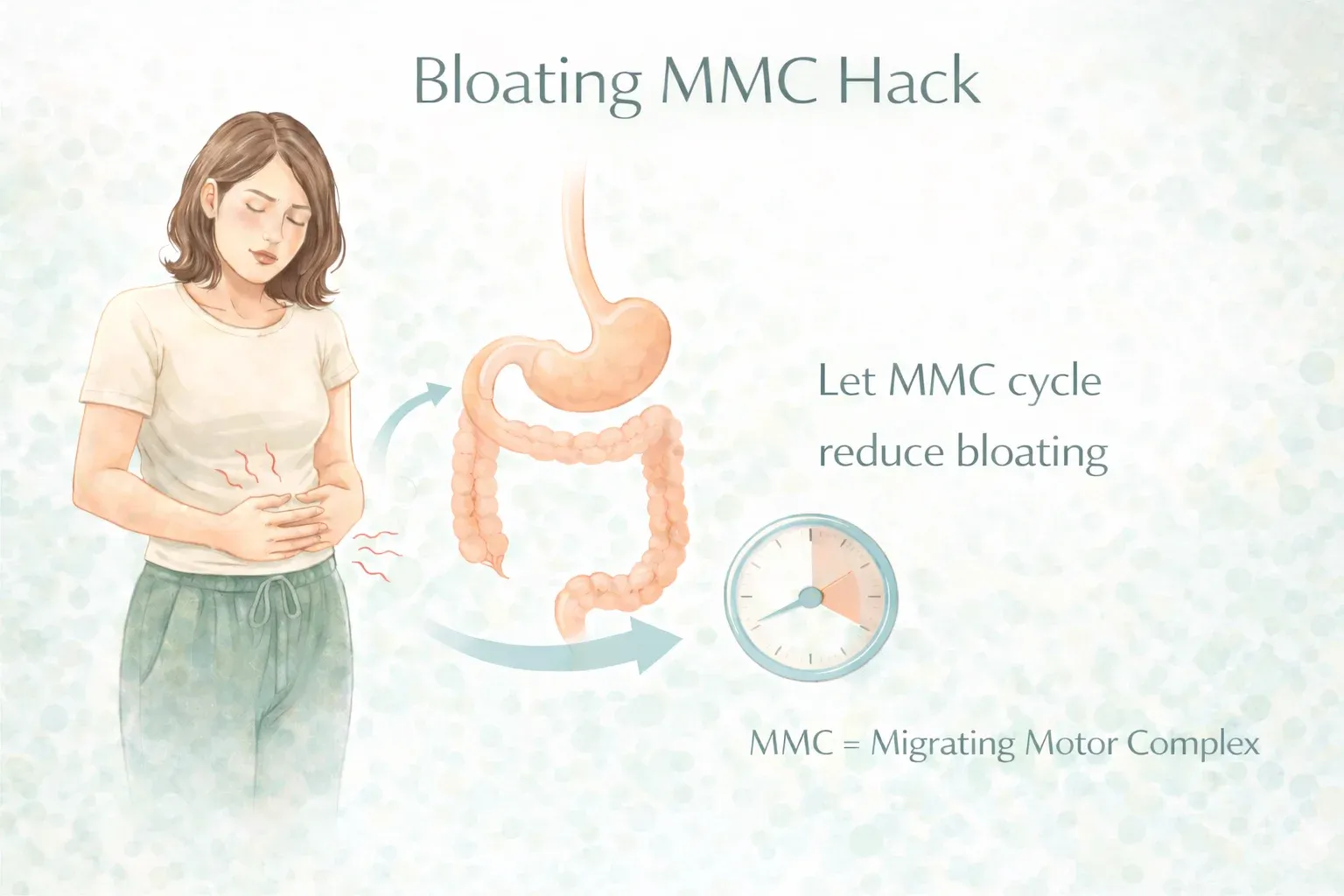
Quick Answer
The bloating MMC hack is not a supplement or a detox. It is a set of meal timing habits that support the Migrating Motor Complex (MMC) - a real, physiological cleaning wave your gut runs automatically between meals. When MMC waves run consistently, bloating tends to stay manageable. When they are disrupted by frequent snacking, late dinners, or irregular sleep, gas builds up and the belly feels heavier and tighter as the day goes on.
- What it means: The MMC hack supports the gut's natural between-meal cleaning waves
- Best for: Day-long bloating, snacking-linked bloating and bloating that improves with meal gaps
- Main habit: Keep 3-4 hour gaps between meals and avoid frequent caloric snacking
- Support habits: Consistent morning routine, early dinner, post-meal walking and stress control
- Medical help: Needed if bloating is severe, persistent, painful or linked with red-flag symptoms
The bloating MMC hack is not a supplement or a detox. It is a set of meal timing habits that support the Migrating Motor Complex (MMC) - a real, physiological cleaning wave your gut runs automatically between meals. When MMC waves run consistently, bloating tends to stay manageable. When they are disrupted by frequent snacking, late dinners, or irregular sleep, gas builds up and the belly feels heavier and tighter as the day goes on.
Most people who apply MMC-friendly habits consistently see a noticeable reduction in day-long bloating within 2-4 weeks. It is not a cure, and it does not work for every type of bloating. But for people whose bloating worsens through the day, improves after longer meal gaps, or is clearly linked to snacking patterns, supporting MMC rhythm is one of the most evidence-aligned, low-risk starting points available.
What Is the MMC? The Gut's Between-Meal Housekeeping System
The Migrating Motor Complex (MMC) is a cyclical pattern of electrical and muscular contractions that moves through the stomach and small intestine during fasting. It is the gut's built-in housekeeping mechanism - triggered automatically when digestion is complete and no new food is arriving.
Each MMC wave travels from the stomach down through the small intestine, pushing forward anything not absorbed: food particles, mucus, dead cells, and excess bacteria. Without this sweep, the small intestine becomes a slow environment where bacteria and fermentable matter accumulate - and that is where bloating, gas, and discomfort typically begin.
Three things make the MMC clinically important:
- It is the primary mechanism preventing bacterial overgrowth in the small intestine
- It explains why many people feel lighter and less bloated after a proper overnight fast
- Its disruption is linked in research to conditions like Small Intestinal Bacterial Overgrowth (SIBO), IBS-type symptoms, and chronic functional bloating
Research published in Nature Reviews Gastroenterology & Hepatology confirms that MMC activity is regulated by the enteric nervous system and modulated by the hormone motilin. Low motilin levels, chronic stress, and disrupted circadian rhythm are among the strongest inhibitors of regular MMC cycling.
According to Mool Health's gut health team, the MMC is one of the most underappreciated mechanisms in everyday digestive health - and one of the most directly addressable through lifestyle changes alone.
How MMC Digestion Works: The 4-Phase Cycle Explained
The MMC runs in a repeating cycle of approximately 90-120 minutes during fasting. Each full cycle has four distinct phases, and each phase does a specific job.
Phase I - Quiet Rest (45-60 minutes) The gut is relatively still. Minimal contractions occur. This is not inactivity - it is preparation. The enteric nervous system is building up the electrical signal needed for the sweep.
Phase II - Irregular Contractions (30-45 minutes) Contractions begin but are irregular and uncoordinated. Enzyme secretion increases. This phase loosens and mixes any remaining material in the small intestine, preparing it for the sweep ahead.
Phase III - The Sweep (5-10 minutes) This is the critical phase. A strong, coordinated wave of contractions moves from the stomach through the small intestine in a single direction - toward the large intestine. This is the actual "housekeeper wave." It clears bacteria, mucus, and undigested matter. MMC Phase III lasts only 5-10 minutes per cycle but is responsible for clearing the majority of bacteria from the small intestine between meals.
Phase IV - Brief Transition (0-5 minutes) Contractions taper off and the cycle resets back to Phase I.
The key rule: eating - or drinking any calorie-containing liquid - resets the entire MMC cycle back to Phase I. This is why frequent snacking effectively blocks MMC completion. If you eat or sip caloric drinks every 60-90 minutes, Phase III may never arrive.
What Does "Bloating MMC Hack" Mean?
The term "bloating MMC hack" refers to practical habits that help MMC waves happen more regularly. It is not a medicine and not a guarantee. It is mainly about adjusting meal timing, morning routine, and gut rhythm so the digestive tract can complete its natural clean-up cycles between eating occasions.
The bloating MMC hack works by removing the things that interrupt MMC cycling - primarily frequent caloric intake between meals - and adding habits that support gut motility: consistent wake times, post-meal movement, and calmer evenings.
Mool Health frames this approach as a starting point for people whose bloating pattern matches MMC disruption, not as a standalone solution for all digestive symptoms.
Signs Your Bloating May Be Linked to Weak MMC Activity
Not all bloating has the same cause. The following signs suggest MMC disruption may be a contributing factor:
- Bloating is mild in the morning and worsens progressively through the day
- Frequent burping or gassiness after small meals
- Feeling full for hours after eating modest portions
- Bloating clearly increases on days with frequent snacking
- Noticeable relief when longer gaps are kept between meals
If bloating is equally bad in the morning regardless of what was eaten the night before, or is triggered specifically by foods like dairy, wheat, or legumes, MMC disruption is less likely to be the primary driver.
Why MMC Gets Disrupted: Common Causes
MMC disruption has several well-documented drivers. The following are among the most common in everyday life.
Constant snacking and tea breaks MMC waves need true quiet time between meals. Even small snacks, sweetened tea, or milk coffee can reset the digestive cycle and reduce the window MMC gets to run. Snacking 5+ times per day - including caloric drinks - is one of the strongest behavioural disruptors.
Circadian rhythm disruption Late dinners, late sleep, and irregular wake times weaken digestive rhythm. Research from Chronobiology International shows that irregular sleep timing reduces gut motility, including MMC efficiency, by disrupting the gut's internal clock. MMC activity is stronger during the day and weaker at night.
Chronic stress A 2022 review in Neurogastroenterology & Motility confirmed that sustained psychological stress reduces MMC frequency and amplitude through the gut-brain axis - specifically by increasing corticotropin-releasing factor (CRF), which inhibits motilin release. This explains why people under sustained work pressure often report progressive worsening of bloating over weeks.
Antibiotic overuse Repeated antibiotics can alter the gut microbiome and increase fermentation. This adds to bloating when motility is already slow.
Frequent high-sugar snacks High-sugar foods can cause inflammation and may reduce gut resilience, increasing bloating sensitivity over time.
Low Vitamin D and B12 Low levels of these nutrients can contribute to fatigue and low activity, indirectly reducing natural gut movement patterns.
The Bloating MMC Hack: A Safe, Practical Routine
The bloating MMC hack involves five categories of habit change. These steps focus on supporting meal rhythm and gentle motility. They are generally safe for most adults, though individual tolerance varies.
1. Build a 3-4 hour gap between meals
- Keep 3-4 hours between main meals when possible
- Avoid constant nibbling, especially in the evening
- If you drink tea or coffee between meals, keep it plain - no added sugar, milk, or honey
- Count every caloric drink as a "meal" for the purpose of the gap
2. Start your day with a consistent morning routine
- Keep your wake time within a 60-minute window daily, including weekends
- Get 10-15 minutes of morning light exposure within an hour of waking
- Eat breakfast within 1-2 hours of waking if it suits your body's hunger rhythm
3. Walk after meals
- Take a 10-15 minute easy walk after lunch or dinner
- Avoid lying down immediately after eating
- Light movement supports gastric emptying - a 2022 study in Sports Medicine found that a 10-15 minute low-intensity walk after eating accelerated gastric emptying compared to sitting or lying down
4. Choose dinners that digest easily
- Aim for an earlier dinner timing when possible
- Choose cooked vegetables, simple dal, or khichdi-style meals when bloating is frequent
- Reduce very spicy, fried, or high-sugar foods at night
5. Calm the gut-brain axis
- Practice 5 minutes of slow breathing before meals
- Set a screen cut-off before bed to improve sleep depth
- Build a short evening wind-down routine to reduce cortisol before sleep
Foods and Habits That Commonly Block MMC Rhythm
The following inputs are common MMC disruptors. They do not affect everyone identically, but they are frequently associated with day-long bloating when consumed regularly:
- Constant sipping of milk tea, sweetened coffee, or fruit juices throughout the day
- Frequent "healthy snacks" - biscuits, namkeen, energy bars - between main meals
- Late-night eating close to bedtime
- Very large meals after extended fasting periods
- Alcohol late in the evening
Mool Health's gut assessment process typically maps snacking frequency and drink timing as part of its lifestyle review, because these are among the most common, modifiable MMC disruptors.
What the Research Says: MMC, Bloating & SIBO
The clinical link between MMC disruption and bloating is not a wellness theory. It has a growing research base.
MMC and SIBO Small Intestinal Bacterial Overgrowth (SIBO) occurs when bacteria multiply in the small intestine beyond normal levels. A landmark study in Digestive Diseases and Sciences found that patients with reduced MMC activity had significantly higher rates of SIBO compared to those with normal MMC cycling. Without Phase III sweeping, bacteria accumulate in the small intestine where they ferment carbohydrates and produce hydrogen and methane gas - the gases directly responsible for bloating, distension, and altered bowel habits.
Stress and MMC suppression Chronic psychological stress reduces MMC frequency and amplitude through the gut-brain axis. This explains why bloating often worsens progressively during high-stress periods rather than on individual bad days.
Circadian rhythm and gut motility MMC activity follows a circadian pattern. Late-night eating and irregular sleep timing reduce gut motility, including MMC efficiency, by disrupting the gut's internal clock.
What the evidence does not yet confirm Most research on MMC is from clinical populations - people with SIBO, IBS, or gastroparesis. Large randomised controlled trials specifically testing meal-timing interventions for MMC optimisation in healthy adults remain limited. The habits recommended in the MMC hack are evidence-aligned - not yet evidence-proven at the level of a clinical drug trial. This distinction matters.
MMC Hack vs Other Bloating Remedies: An Honest Comparison
| Approach | How It Works | Best For | Limitations |
|---|---|---|---|
| MMC hack (meal timing + movement) | Supports gut's natural between-meal sweep | Day-long bloating, snacking-related bloating | Requires habit change; not fast-acting |
| Probiotics | Replenishes beneficial gut bacteria | Post-antibiotic bloating, microbiome imbalance | Slow results (4-8 weeks); wrong strains can worsen SIBO |
| Digestive enzymes | Supports breakdown of food during meals | Bloating after heavy or mixed meals | Addresses digestion but not MMC rhythm |
| Intermittent fasting (16:8) | Creates extended fasting window for MMC | Consistent meal-schedule followers | Too restrictive for many; can worsen bloating if stress is high |
| Low-FODMAP diet | Reduces fermentable carbs in the gut | IBS-type bloating, confirmed FODMAP intolerance | Restrictive; not a root-cause fix; needs reintroduction phase |
| Motility agents | Pharmacological gut motility support | Clinically confirmed motility disorders | Prescription-required; side effects; not a first-line lifestyle option |
The MMC hack costs nothing, carries no side effects for most people, and addresses a real physiological mechanism. Its main limitation is that it works best when slow gut motility is the primary driver - not food intolerances, lactase deficiency, or structural issues. If meal spacing alone does not reduce bloating within 3-4 weeks, a deeper assessment is worth considering.
What to Realistically Expect: A Month-by-Month Timeline
Results from MMC-friendly habits are not immediate and are not uniform across individuals. Here is what most people experience when applying the routine consistently.
Days 1-5: Adjustment, not yet relief Changing meal timing after years of frequent snacking can initially increase hunger, mild headaches, or slight irritability. Bloating may not change yet - the gut is recalibrating.
Week 1-2: Early signals Many people notice morning bloating reduces first, because the overnight fast is now longer and more consistent. Some notice less gas during the morning hours. Evening bloating may still be present.
Week 3-4: Measurable change For people whose bloating is primarily driven by slow motility and frequent snacking, most notice a clear reduction in abdominal tightness through the day by weeks 3-4. Bowel regularity often improves around the same time, because improved MMC function supports transit through the large intestine as well.
Month 2-3: Sustained improvement or plateau If bloating has substantially improved, the habits can be maintained as a permanent rhythm. If improvement has plateaued, this signals that other factors - microbiome imbalance, food intolerances, hormonal drivers, or structural issues - need evaluation.
Factors that influence how quickly results appear:
- How frequently you were snacking before (more snacking = longer to reset)
- Sleep timing consistency (irregular sleep slows circadian-linked gut rhythm improvement)
- Stress load (high chronic stress suppresses MMC even with corrected meal timing)
- Whether other root causes - lactose intolerance, FODMAP sensitivity, thyroid dysfunction - are also present
Is the MMC Hack Right for You? Who Benefits and Who Needs More
The bloating MMC hack is most likely to help in specific situations and least likely to help in others.
Most likely to benefit:
- Bloating that worsens through the day but is mild in the morning
- Snacking frequency of 5+ times per day including tea, milk coffee, or juices between meals
- Irregular meal timing or shift-work schedules
- Bloating linked to periods of high stress or poor sleep
- Mild post-antibiotic gut disruption in otherwise healthy individuals
Less likely to benefit without additional support:
- Bloating accompanied by confirmed food intolerances (lactose, gluten, high-FODMAP foods)
- Suspected or confirmed SIBO (requires medical diagnosis and targeted treatment)
- Bloating linked to thyroid dysfunction or PCOS-related hormonal patterns
- Bloating with confirmed constipation as the primary driver
- Bloating with any red-flag symptoms
A note on safety: The MMC hack involves no supplements, no food restriction, and no clinical risk for most adults. The core habits - consistent meal timing, morning routine, post-meal walking - are safe for the vast majority of people. Those with a history of eating disorders, diabetes requiring frequent meals, or pregnancy should consult a clinician before making significant meal timing changes.
When to Stop Trying Hacks and See a Doctor
Persistent, severe, or red-flag bloating always requires medical evaluation. No lifestyle approach - including the bloating MMC hack - replaces clinical assessment when the following are present:
- Unexplained weight loss
- Blood in stool or black stools
- Persistent vomiting
- Severe or worsening abdominal pain
- Bloating with fever or ongoing diarrhoea
- New symptoms appearing after age 40
Bloating can also relate to constipation, lactose intolerance, reflux, thyroid dysfunction, IBS, or SIBO patterns - all of which require different approaches. If bloating is frequent and affects daily life, deeper evaluation is more productive than repeatedly trialling lifestyle adjustments.
Ayurveda-Informed Understanding of Bloating
In Ayurveda, bloating often relates to Vata disturbance - irregular routine, dryness, cold foods, and stress can worsen gas and distension. The MMC-friendly approach overlaps meaningfully with traditional Ayurvedic advice: warm cooked meals, consistent meal timing, and calm eating reduce bloating for many people across both frameworks.
Mool Health incorporates a Prakruti analysis alongside its gut assessment, which allows lifestyle recommendations to account for individual constitution alongside clinical markers - rather than applying a single protocol to everyone.
A Root-Cause Approach: Mool Health's Perspective
Mool Health looks at bloating as a pattern linked to digestion quality, microbiome balance, liver-gut support, meal rhythm, stress load, sleep timing, and bowel regularity. The MMC hack can be useful when bloating is linked to frequent snacking and weak gut rhythm, but it should not be treated as a universal cure.
A better root-cause approach is to map the full pattern: when bloating starts, how often you snack, whether symptoms improve after longer meal gaps, how bowel movements are behaving, and whether stress or sleep disruption is worsening symptoms. This makes the solution more targeted than randomly trying hacks.
Key Takeaways
A complete guide to the bloating MMC hack, MMC digestion, meal timing, gut motility, snacking-related bloating, safety and red flags.
Your gut is unique your healing should be too.

Disclaimer
The content provided by Mool Health is for educational and informational purposes only and should not be considered a substitute for professional medical advice, diagnosis, or treatment.