
Fiber Rich Foods: Indian Food List, Types & Daily Requirement
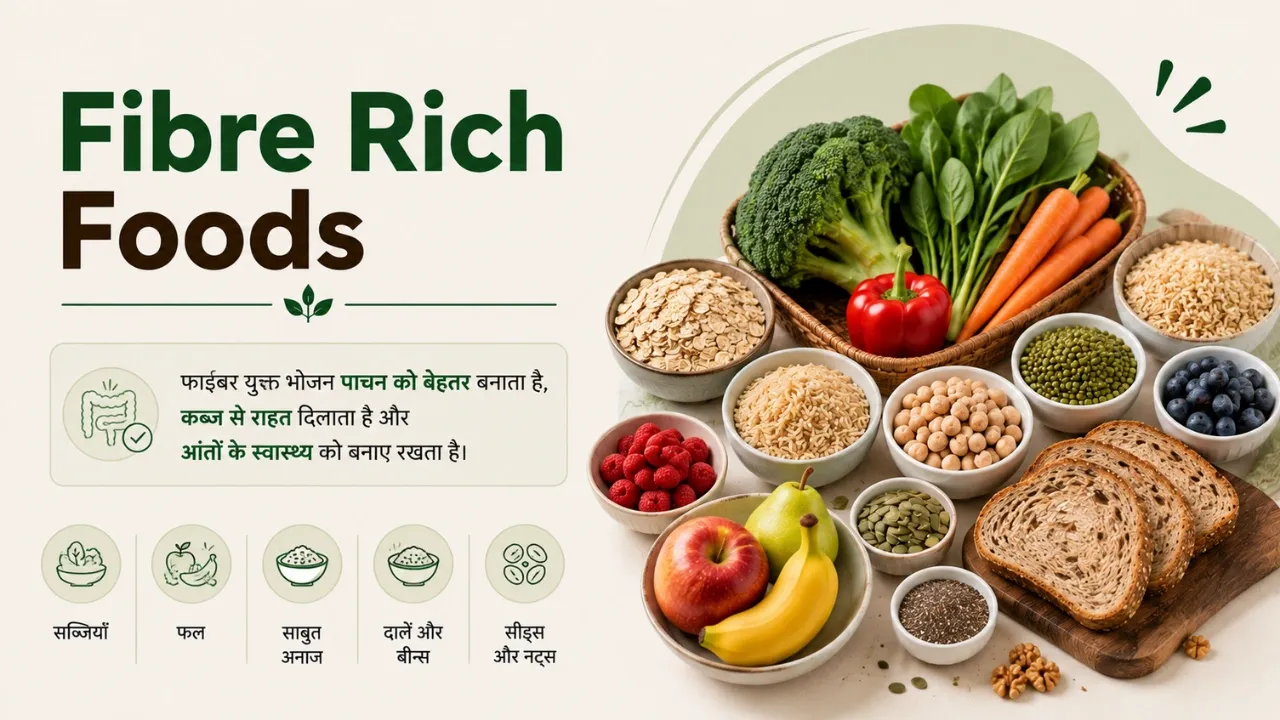
Fibre-Rich Foods include dal, whole grains, millets, fruits, vegetables, nuts and seeds that support digestion, regular bowel movements, gut health and healthy weight management.
Quick Answer
Fibre-rich foods are plant foods that support healthy digestion, regular bowel movements, fullness, and a healthy gut environment. Most adults need about 22–34 grams of fibre a day, depending on age and sex.
- Choose a variety of dal, beans, whole grains, millets, vegetables, fruits, nuts, and seeds.
- For constipation or piles, increase fibre gradually and drink enough fluids.
- Fibre can support weight management by helping you feel fuller, but it is not a fat-burning food.
- Children and babies have different needs, so use age-appropriate foods and portions rather than an adult-style high-fibre diet.
- If you currently eat little fibre, make small changes and increase your intake gradually to reduce bloating and digestive discomfort.
Traditional Indian diets are naturally packed with dietary fibre through staple grains, pulses, millets, and vegetables. Daily fibre requirements generally range from 21 to 25 grams for women and 30 to 38 grams for men to support optimal digestive health.
If you are not sure how much fibre you need, which foods actually count as fibre-rich, or if you worry about constipation, piles, weight management, or your child's intake, this guide is for you. This guide answers those questions simply, with familiar Indian food choices.
What Are Fibre-Rich Foods?
Fibre is a type of carbohydrate that your body does not fully digest. It passes through your digestive system and supports normal bowel function.
Fibre-rich foods contain significant amounts of dietary fibre. Most fibre comes from plant foods. These include: whole grains, pulses, legumes, fruits, vegetables, nuts, and seeds. Choosing a variety of these foods can help you get different types of fibre.
How Does Fibre Support Your Health?
Fibre supports several normal body functions. It can support regular bowel movements. Some types also slow digestion and help you feel fuller after meals.
Fibre also serves as a food source for certain gut bacteria. A varied, fibre-rich diet can therefore support a healthy gut environment.
What Are the Different Types of Fibre?
Fibre is commonly grouped into soluble and insoluble fibre. Both occur naturally in many plant foods.
Soluble Fibre
- Soluble fibre dissolves in water and forms a gel-like substance during digestion. It can help slow digestion and may support healthy blood glucose and cholesterol levels.
- Common sources include: Oats, Barley, Dal, Beans, Chickpeas, Fruits, and Chia seeds.
Insoluble Fibre
- Insoluble fibre does not dissolve in water. It adds bulk to stool and supports normal movement through the digestive tract.
- Common sources include: Whole grains, Vegetables, Fruit skins, Nuts, and Seeds.
Do You Need Both Types of Fibre?
Yes, you need to eat both and do not need to calculate every type separately. You can focus on eating different plant-based foods throughout the day. This naturally gives you a mixture of fibre types.
How Much Fibre Do You Need Every Day?
There is no single number that suits everyone. For adults, NIDDK (National Institute of Diabetes and Digestive and Kidney Diseases) recommends around 22-34 grams of fibre daily, depending on age and gender.
Daily Fibre Requirement for Adults
These figures are useful guides rather than targets you must reach perfectly every day:
- Adult women need around 21-28 g.
- Adult men need around 30-38 g.
- Older women need at least 22 g.
- Older men need around 28-30 g.
How Much Fibre Do Children Need?
Children need fibre too, but their requirements differ from adults. NIDDK reports a broad range of 14-31 grams daily, depending on age and sex. Their overall diet matters more than chasing an exact number every day.
The table helps you get clarity on understanding children’s fibre requirements based on age:
| Age or group | Fibre needs | Daily Target (Grams) |
|---|---|---|
| Younger children | Lower amounts | 14 to 25 grams (19g for ages 1 to 3; 25g for ages 4 to 8) |
| Older children | Higher amounts | 22 to 31 grams (26g for girls; 31g for boys aged 9 to 13) |
| Teenagers | The needs reach adult levels | 25 to 38 grams (25 to 26g for girls; 31 to 38g for boys aged 14 to 18) |
How Much Fibre Do Babies Need?
Babies need a different approach. There are no standard fibre targets for infants under one year. Once complementary foods begin, offer age-appropriate fruits, vegetables, grains and pulses. The texture and preparation should match your baby's developmental stage.
What Are the Best Fibre-Rich Foods?
The best fibre-rich foods are usually simple plant foods. The table shows a few options that you can opt for:
| Food group | Indian fibre-rich foods | Easy ways to include them |
|---|---|---|
| Pulses | Dal, chickpea, gram, kidney beans | Dal, curry, chaat |
| Whole grains | Whole wheat, oats, barley | Roti, porridge, upma |
| Millets | Finger millet, jowar, bajra | Roti, dosa, bhakri |
| Vegetables | Peas, carrots, bhindi, broccoli | Sabzi, stir-fry |
| Fruits | Guava, pear, apple, orange | Whole fruit |
| Seeds | Chia, flax, sunflower seeds | Curd, oats, chutney |
| Nuts | Almonds, peanuts, pistachios | Snacks or toppings |
Best Fibre-Rich Foods for Vegetarians
You can get plenty of fibre from a vegetarian diet. Some good choices include: Dal, Chickpeas, Kidney beans, Sprouts, Oats, Finger millet, Jowar, Bajra, Vegetables, Fruits, Nuts, and seeds.
You can follow some simple combinations that can make this easier:
- Dal with whole wheat roti gives you pulses and whole grains.
- Kidney beans with rice and vegetables create a fibre-rich, familiar meal.
- Curd with fruit and chia seeds can make an easy snack or breakfast addition.
Protein and Fibre-Rich Foods: What Can You Eat Together?
Protein and fibre perform different roles in your diet. Combining both can make meals more balanced and satisfying. The table below shows the best protein and fibre-rich food combinations:
| Meal combination | Protein source | Fibre source |
|---|---|---|
| Dal and whole wheat roti | Lentils | Whole wheat atta |
| Kidney beans and rice | Kidney beans | Kidney beans and brown rice |
| Chana chaat | Chickpeas | Chickpeas and vegetables |
| Sprouts salad | Sprouts | Sprouts and vegetables |
| Oats with nuts and seeds | Nuts and seeds | Oats and seeds |
| Paneer and vegetables | Paneer | Vegetables |
| Soy and vegetables | Soy | Vegetables |
Fibre-Rich Foods: Indian Vegetables to Add to Your Meals
Vegetables are an easy way to increase your daily fibre intake. They also add vitamins, minerals and other plant compounds to your meals.
Some useful choices of vegetables include: green peas, carrots, okra (ladies' finger), green beans, broccoli, sweet potato, cauliflower, spinach, pumpkin, and corn. Try adding vegetables to dal, poha, upma, paratha, dosa or rice dishes.
Fibre-Rich Foods for Constipation
If constipation worries you, fibre can be part of a helpful dietary approach. Fibre can increase stool bulk and help make stools easier to pass.
You can include some of these in your diet: Dal and legumes, Whole grains, Fruits, Vegetables, Nuts, and Seeds. NIDDK recommends increasing fibre while also drinking enough liquids. This helps fibre work more effectively.
What Should You Drink When Increasing Fibre?
Drinking water is the simplest choice. You can also get fluids from other suitable drinks and high-water-content foods. The important point is not to increase fibre sharply while ignoring your fluid intake. If constipation continues despite dietary changes, consider speaking with a healthcare professional.
How Should You Increase Fibre If You Currently Eat Very Little?
You do not need to switch to a very high-fibre diet suddenly. Increase your intake gradually by following these simple steps:
- Add one fruit each day.
- Include dal with one main meal.
- Add a vegetable to lunch or dinner.
- Replace some refined grains with whole grains.
- Add nuts or seeds in suitable portions.
A gradual change can make the transition more comfortable.
Best Fibre-Rich Foods for Piles
Fibre can be especially useful when constipation and straining are contributing to piles. A fibre-rich diet can help produce softer stools that are easier to pass. This may reduce straining during bowel movements.
The best fibre-rich options for piles include: Dal, Chickpeas, Kidney Beans, Whole grains, Fruits, Vegetables, Nuts, and Seeds.
How to Add More Fibre to Your Indian Diet?
You do not need to completely change your usual meals. Try small swaps instead. The table below shows some good fibre-rich options which you can add to your meals:
| Meal | Simple Fibre Addition |
|---|---|
| Breakfast | Add fruit, oats or vegetables |
| Lunch | Add dal, vegetables and whole grains |
| Snack | Choose fruit, chickpeas or nuts |
| Dinner | Add dal, vegetables or millets |
If you are increasing fibre for constipation or piles, increase it gradually. Consuming adequate fluids also matters.
Fibre-Rich Foods for Weight Loss: Do They Help?
Fibre-rich foods can support weight management, but they are not fat-burning foods. Many high-fibre foods add volume and can help you feel satisfied after eating. This may make it easier to manage your overall food intake. However, your total diet, portions, activity and eating pattern all contribute to weight management.
Best Fibre-Rich Foods for Weight Management
Whole foods are generally more useful than relying on fibre-fortified products (foods or drinks that have extra plant fibre artificially added to them during manufacturing). The table shows the best fibre-rich foods for weight management:
| Fibre-rich food | How it can support weight management |
|---|---|
| Vegetables | Add volume and fibre to meals, which can help you feel full with fewer calories. |
| Whole fruits | Provide fibre and water, which can support fullness between meals. |
| Dal | Provides fibre and plant protein, helping make meals more satisfying. |
| Chana (Chickpea or gram) | Combines fibre and protein, which may help you stay full for longer. |
| Kidney beans | Provide fibre and protein that can support satiety and balanced meals. |
| Oats | Contain soluble fibre that can help increase fullness. |
| Millets | Provide fibre and can make meals more filling. |
| Whole grains | Provide more fibre than refined grains, supporting fullness and meal satisfaction. |
| Nuts and seeds | Provide fibre, protein and healthy fats, which can help with satiety. |
Fibre-Rich Foods for Babies
Babies should not follow an adult-style high-fibre diet. Their food needs change rapidly during the first year. Once complementary feeding begins, age-appropriate plant foods can provide fibre. The list of fibre-rich foods suitable for babies may include:
- Soft cooked vegetables
- Mashed or soft fruits
- Oats (Oatmeal and infant oat cereals)
- Soft dal
- Beans prepared safely
- Suitable whole-grain foods
Avoid forcing large amounts of fibre into a baby's diet. The texture and preparation matter as much as the food itself.
When Can Babies Have Fibre-Rich Foods?
Fibre-rich foods can be introduced as part of complementary feeding when your baby is developmentally ready. Start with suitable textures and age-appropriate portions. Nutritional needs during infancy are different from those of older children and adults.
Best Fibre-Rich Foods for Kids
Kids can get fibre from many familiar Indian foods. Some of the good options include: Dal, Bengal gram, Kidney beans, Oats, Finger millets, Whole wheat roti, Peas, Guava, Apple, Sweet potato, and Vegetables.
Easy Ways to Add More Fibre to Your Child's Meals
You do not need to make every meal high in fibre. Aim for variety across the day. Keep the changes simple:
- Add vegetables to paratha.
- Mix dal into khichdi.
- Add fruit to breakfast.
- Serve chickpeas as a snack.
- Choose whole-grain options more often.
- Add vegetables to dosa, cheela or poha.
What Happens If You Eat Too Much Fibre?
More fibre is not always better. A sudden increase can cause bloating, gas, abdominal discomfort, and changes in bowel habits. This does not mean you should avoid fibre. It usually means your intake should increase gradually. Drinking enough fluids can also help your body adjust to a higher-fibre diet.
Mool Health’s Perspective on Fibre-Rich Foods
At Mool Health, we believe healthy eating should feel practical and not restrictive. You do not need expensive superfoods to increase your fibre intake. Simple foods like dal, vegetables, fruits, whole grains, millets, nuts and seeds already fit naturally into Indian meals. Start with one small change. Add a fruit, include another vegetable or choose a whole grain. Then build from there.
If constipation, piles or other digestive concerns continue despite dietary changes, personalised guidance can help identify the right approach.
References
National Institute of Diabetes and Digestive and Kidney Diseases. Eating, Diet, & Nutrition for Constipation.
https://www.niddk.nih.gov/health-information/digestive-diseases/constipation/eating-diet-nutrition
National Institute of Diabetes and Digestive and Kidney Diseases. Treatment for Constipation.
https://www.niddk.nih.gov/health-information/digestive-diseases/constipation/treatment
National Institute of Diabetes and Digestive and Kidney Diseases. Eating, Diet, & Nutrition for Constipation in Children.
ICMR-National Institute of Nutrition. Dietary Guidelines for Indians 2024.
https://nin.res.in/dietaryguidelines/pdfjs/locale/DGI_2024.pdf
Medical Disclaimer
This article provides general nutrition information for educational purposes. It does not replace individual advice from a qualified healthcare professional. Your nutritional needs can vary with age, health, activity level and dietary pattern. Babies and children may need age-specific nutrition guidance. Persistent constipation, significant discomfort or ongoing digestive symptoms should be discussed with a healthcare professional.
Key Takeaways
Fibre-Rich Foods include dal, whole grains, millets, fruits, vegetables, nuts and seeds that support digestion, regular bowel movements, gut health and healthy weight management.
Your gut is unique your healing should be too.

FAQs
Fibre-rich foods contain dietary fibre that your body does not fully digest. Common sources include whole grains, pulses, fruits, vegetables, nuts and seeds.
Legumes, seeds, whole grains, fruits and vegetables can provide substantial fibre. Instead of choosing one best food, include several groups regularly.
Dal, Bengal gram, chickpeas, kidney beans, soy, sprouts, nuts and seeds provide both nutrients. Pairing these foods with vegetables or whole grains can create balanced meals.
Adults generally need around 22-34 grams daily, depending on age and gender. Your individual needs may differ. It is better to consult your doctor or nutritionist before starting a new diet.
Yes, eating too much fibre can cause or worsen constipation if it is not accompanied by enough water. Increasing fibre intake too quickly, or consuming it without adequate hydration, leads to bloating, gas, and digestive discomfort.
Disclaimer
The content provided by Mool Health is for educational and informational purposes only and should not be considered a substitute for professional medical advice, diagnosis, or treatment.