
Viral Diarrhea Symptoms & Safe Home Care Guide
Viral diarrhea symptoms include watery stools, vomiting, cramps, and mild fever caused by intestinal viral infections.
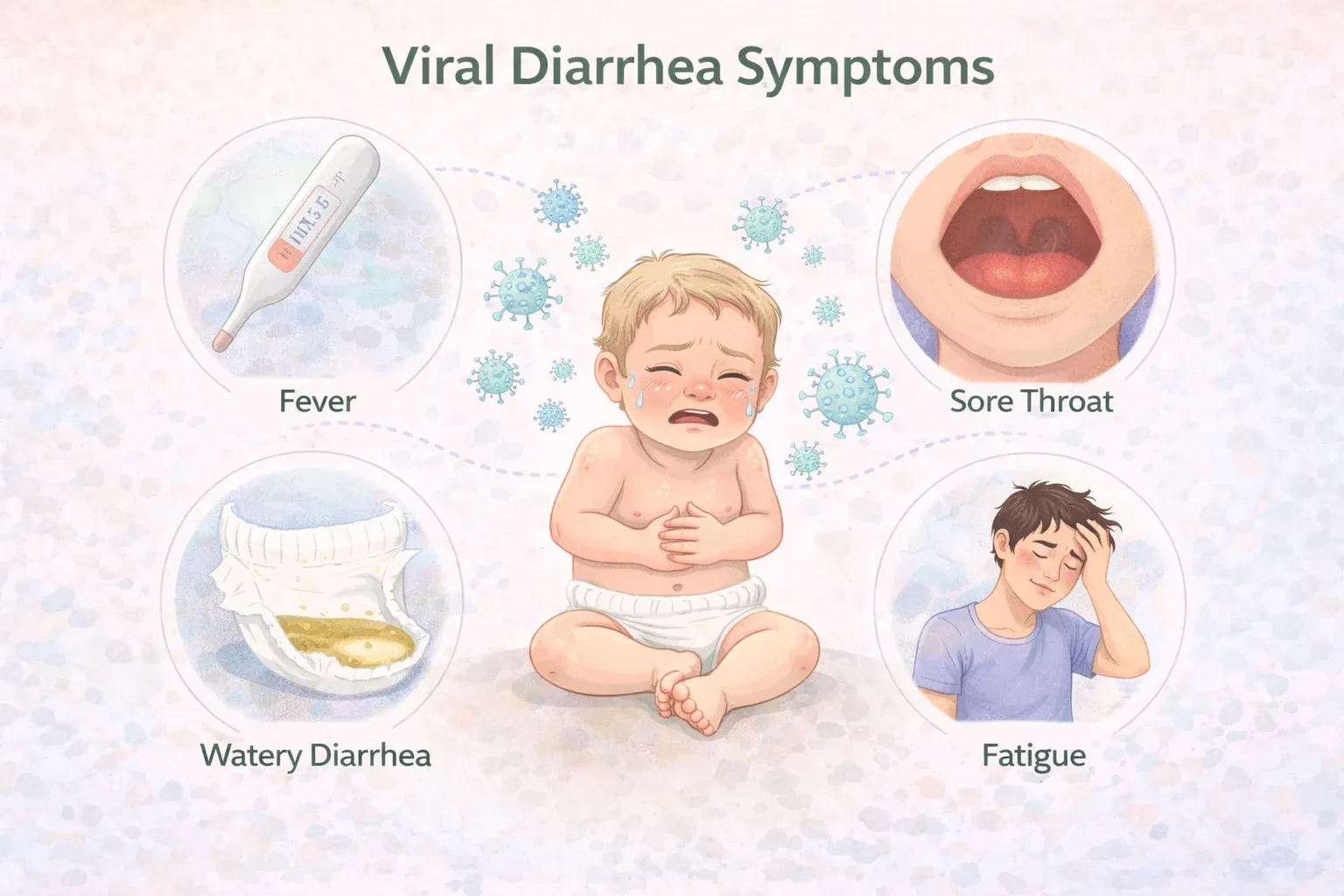
Viral diarrhea symptoms usually begin suddenly with loose stools, stomach cramps, nausea, or mild fever. It spreads easily through contaminated food, water, or close contact. Most cases improve with hydration and rest, but babies, elderly people, and those with dehydration signs need urgent care.
- Viral diarrhea symptoms often include watery stools, vomiting, and fatigue.
- Symptoms of viral diarrhea in infants can escalate quickly due to dehydration risk.
- Home care focuses on fluids, electrolytes, and gut rest.
- Persistent fever, blood in stool, or lethargy require medical attention.
What is viral diarrhea?
Viral diarrhea is an intestinal infection caused by viruses such as rotavirus or norovirus. It is different from bacterial diarrhea because antibiotics are usually not required. The infection irritates the intestinal lining, reducing water absorption and increasing fluid loss through stools.
In India and globally, viral diarrhea spreads easily during seasonal changes, travel, and in daycare or school settings.
Common viral diarrhea symptoms
- Watery loose stools (3 or more times daily)
- Abdominal cramps
- Nausea or vomiting
- Mild to moderate fever
- Headache or body ache
- Weakness and fatigue
Symptoms typically begin within 1–3 days of exposure and may last 2–5 days.
Viral diarrhea symptoms in babies
Viral diarrhea symptoms in babies can progress faster because infants lose fluids quickly. Parents should watch for:
- Frequent watery stools
- Reduced feeding
- Fewer wet diapers
- Dry mouth or no tears while crying
- Excessive sleepiness or irritability
Symptoms of viral diarrhea in infants require close monitoring. Babies under 6 months are especially vulnerable to dehydration.
How viral diarrhea affects the gut
| Effect | What Happens | Result |
|---|---|---|
| Intestinal irritation | Inflamed lining | Watery stools |
| Reduced absorption | Less water retained | Dehydration risk |
| Electrolyte loss | Sodium & potassium drop | Weakness & dizziness |
Home care for viral diarrhea
Hydration first
- Oral rehydration solution (ORS)
- Breastfeeding continuation for infants
- Small, frequent sips of clean water
Light diet
- Rice, banana, curd (if tolerated)
- Simple khichdi or soft foods
- Avoid fried or spicy meals
Rest and recovery
Adequate sleep supports immune recovery. Avoid heavy physical activity during illness.
When to see a doctor
- Blood in stool
- High persistent fever
- Severe dehydration signs
- Symptoms lasting more than 5 days
- Symptoms of viral diarrhea in infants under 6 months
What about bovine viral diarrhea virus symptoms?
Bovine viral diarrhea virus symptoms (BVD symptoms) refer to a viral disease affecting cattle, not humans. It is important not to confuse bovine viral diarrhea BVD symptoms with human viral diarrhea. Human viral diarrhea is typically caused by rotavirus, norovirus, or similar viruses.
Prevention strategies
- Frequent hand washing
- Safe drinking water
- Proper food hygiene
- Vaccination for rotavirus in infants as advised by pediatricians
Ayurveda-informed understanding
In Ayurveda, viral diarrhea may reflect aggravated Pitta and weakened digestive fire (Agni). Simple, warm, easily digestible foods and adequate fluids align with both traditional and modern care principles.
A Root-Cause Approach: Mool Health’s Perspective
Mool Health evaluates recurrent viral diarrhea symptoms by assessing gut barrier strength, microbiome balance, and inflammation markers through a Gut Test. Prakruti analysis and lifestyle review identify immune resilience, stress load, hydration habits, and metabolic patterns.
The goal is to strengthen gut immunity, restore microbiome balance, and improve circadian rhythm stability. Severe cases are referred to a qualified medical professional. No guarantees are made, as recovery varies individually.
Key Takeaways
Viral diarrhea symptoms include watery stools, vomiting, cramps, and mild fever caused by intestinal viral infections.
Your gut is unique your healing should be too.

FAQs
Watery stools, nausea, vomiting, fever, cramps, and fatigue are common symptoms.
Most cases resolve within 2–5 days with proper hydration.
No. Antibiotics do not treat viral infections unless a bacterial infection is present.
Frequent watery stools, poor feeding, dry mouth, and fewer wet diapers.
Yes, it spreads easily through contaminated hands, food, or water.
It is a viral disease affecting cattle and is different from human viral diarrhea.
Disclaimer
The content provided by Mool Health is for educational and informational purposes only and should not be considered a substitute for professional medical advice, diagnosis, or treatment.