
Postpartum Constipation: Causes, Symptoms and Safe Relief
Postpartum constipation can make recovery uncomfortable, especially after stitches or a C-section. Discover gentle relief steps, breastfeeding considerations, and red flags that need care.
Quick Answer
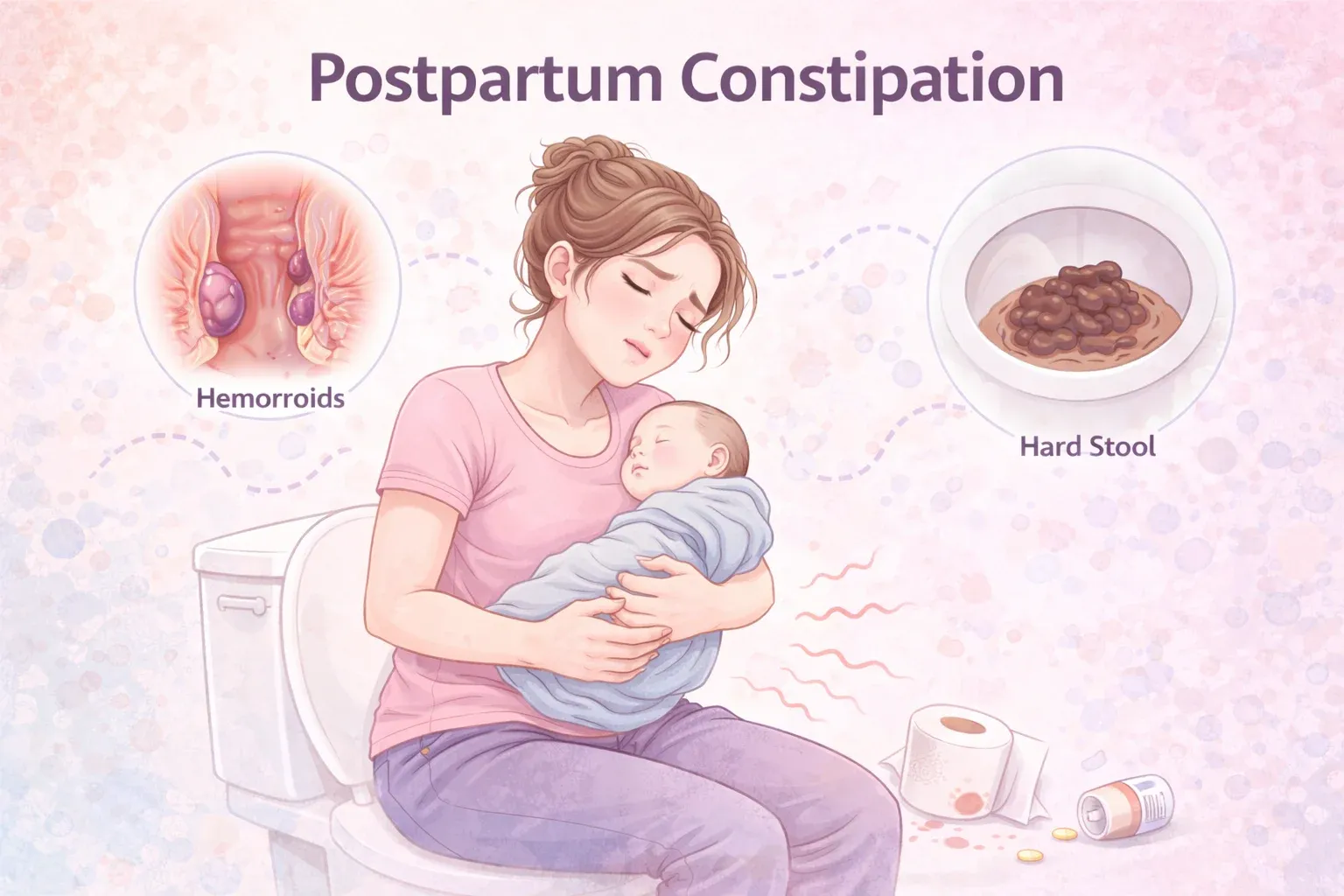
Postpartum constipation is common in the first few days after birth. Passing hard stool can feel especially uncomfortable after stitches, haemorrhoids, or a C-section, but gentle self-care and timely medical advice can help.
- Drink regularly, especially while breastfeeding, unless your clinician has advised a fluid limit.
- Choose soft, fibre-rich foods and increase fibre gradually to avoid extra gas.
- Take short walks when your maternity care team says it is safe.
- Do not delay the urge to pass stool or forcefully strain.
- Contact your maternity team for severe pain, vomiting, fever, heavy rectal bleeding, or an inability to pass stool or gas.
Constipation after childbirth can make an already demanding recovery feel harder. Changes in routine, limited movement, pain after delivery, iron tablets, dehydration, and some pain medicines may all contribute. The aim is to keep stools soft, avoid straining, and ask for support early when self-care is not enough.
What Is Postpartum Constipation?
Postpartum constipation means stools are hard, infrequent, or difficult to pass after delivery. You may need to strain, feel that bowel emptying is incomplete, or avoid going to the toilet because of discomfort around the perineum, stitches, or haemorrhoids.
It is common for the first bowel movement after birth to take a few days. A first stool is often expected within the early postnatal period, but the right timing varies with delivery type, medicines, food intake, hydration, and recovery. Speak with your midwife, obstetrician, or doctor if you are worried or feel increasingly uncomfortable.
Symptoms of Postpartum Constipation
Symptoms are similar to constipation at other times, but they can feel more difficult because the body is healing after pregnancy and delivery.
- Hard, dry, or pellet-like stools
- Straining, pain, or a feeling of blockage during bowel movements
- Bloating, abdominal heaviness, or lower abdominal discomfort
- A sense that the bowel has not fully emptied
- Avoiding the toilet because you are worried about pain from stitches or haemorrhoids
Why Does Constipation Happen After Childbirth?
There is rarely one cause. Several changes can overlap during postpartum recovery.
| Contributing factor | How it can affect bowel movements | Helpful first step |
|---|---|---|
| Reduced movement | Being in bed more often or recovering from surgery can slow normal bowel activity. | Take short, gentle walks when cleared by your maternity team. |
| Perineal pain or stitches | Fear of pain can lead to holding stool, which allows it to become drier and harder. | Use supportive toilet posture and avoid delaying the urge. |
| Iron supplements | Iron can make stools harder or more difficult to pass in some people. | Do not stop iron on your own. Ask whether timing, formulation, or a bowel plan should be adjusted. |
| Opioid pain medicines | Some pain medicines used after a C-section can slow gut movement. | Ask your clinician about constipation prevention while taking them. |
| Low fluid intake | Not drinking enough can contribute to hard stools, especially when feeding a baby and recovering. | Keep water within reach and drink regularly through the day. |
| Changes in meals and sleep | Irregular meals, stress, and fragmented sleep can disrupt normal bowel habits. | Eat regular small meals and build in a calm toilet routine. |
How to Relieve Postpartum Constipation Safely
Use a gradual approach. The goal is to support regular bowel movements without causing more bloating, pain, or strain.
1. Drink regularly through the day
Water, soups, and other unsweetened drinks can support stool softness. Breastfeeding can increase thirst, so keep a drink near you during feeds. Follow your clinician's advice if you have been told to limit fluids because of another health condition.
2. Choose soft fibre foods first
Cooked vegetables, oats, fruit, dal, whole grains, and soaked dried fruit can add fibre gently. Increase fibre step by step rather than suddenly. A rapid increase can worsen gas or bloating when you are already uncomfortable.
3. Add gentle movement when it is safe
Short walks can support routine bowel activity and may reduce the feeling of fullness. Read more about whether walking helps digestion, but follow your obstetrician's instructions after a difficult delivery or surgery.
4. Use supportive toilet posture
Place your feet on a low footstool so the knees are higher than the hips, lean forward slightly, and relax your abdomen. This may reduce straining. Take your time, but avoid sitting and pushing for long periods.
5. Do not ignore the urge
Holding stool can make it drier and harder to pass. Try to create a quiet, unhurried toilet routine after a meal or warm drink, when the natural bowel reflex may be stronger.
6. Get medicine advice early when needed
Ask your maternity team or doctor about a stool softener or laxative if lifestyle measures are not enough, if pain is stopping you from going, or if you are taking iron or opioid pain medicines. The right medicine depends on your health history, delivery, and breastfeeding status.
Foods and Daily Habits That May Help
Build meals around foods you tolerate well. Eating enough is important during recovery, so avoid overly restrictive diets unless a clinician has advised one.
| Try more often | How it may help | Use with care |
|---|---|---|
| Oats, cooked vegetables, dal, fruit, and whole grains | Provide fibre and help build softer, easier-to-pass stools. | Increase slowly if you are very bloated. |
| Warm liquids and soups | Can support hydration and may make a morning toilet routine more comfortable. | Avoid very sugary drinks if they upset your stomach. |
| Prunes or soaked raisins | Some people find them helpful as part of a fibre-rich diet. | Use small portions at first because they may cause gas. |
| Regular meals | May help the body re-establish a consistent bowel rhythm. | Do not skip meals because of constipation unless you feel unwell and a clinician advises it. |
Milk is not a dependable constipation remedy for everyone. Some people find it neutral, while others notice bloating or a change in stools. See whether milk is good for constipation before relying on it as a daily solution.
Postpartum Constipation While Breastfeeding
Breastfeeding does not automatically cause constipation, but long feeds, missed meals, interrupted sleep, and not drinking enough may make hard stools more likely. Keep water close during feeding sessions, choose regular meals where possible, and avoid self-starting herbal laxatives or supplements without checking whether they are suitable while breastfeeding.
When medicine is needed, your clinician can recommend an option that fits your feeding plan. Docusate, lactulose, and polyethylene glycol are examples of laxatives that may be considered in breastfeeding, but individual advice still matters, especially if your baby was born early or has medical needs.
Constipation After a C-Section, Stitches, or Haemorrhoids
Constipation may be more troublesome after a C-section because anaesthesia, reduced movement, and some pain medicines can slow the bowel. With vaginal stitches or haemorrhoids, fear of pain can lead to delaying the first bowel movement. Passing stool does not usually reopen a repaired tear, but avoid forceful straining and speak with your care team if you are anxious about it.
- Use a footstool and do not push hard for long periods.
- Support the perineal area with a clean pad or tissue if this feels more comfortable.
- Ask whether a warm sitz bath is appropriate for your stitches or haemorrhoid discomfort.
- Contact your clinician if pain, swelling, bleeding, or wound symptoms are getting worse.
When to Contact Your Doctor or Maternity Team
Call your maternity team or doctor promptly rather than continuing self-care alone when symptoms are severe, persistent, or accompanied by other warning signs.
- No bowel movement for several days with worsening discomfort or bloating
- Severe or increasing abdominal pain, marked swelling, or vomiting
- Inability to pass stool or gas
- Fever, feeling very unwell, or worsening pain around a C-section incision or perineal wound
- More than a small amount of rectal bleeding, black stool, or blood mixed with stool
- Symptoms that are not improving after one to two weeks despite a consistent routine
Persistent constipation can sometimes be related to medicines, pelvic floor problems, thyroid conditions, or other ongoing digestion problems. A clinician can help identify the cause and offer safe treatment.
Build a Gentler Gut Routine After Delivery
Small changes in fluids, food, movement, and toilet habits can make recovery more comfortable. Explore personalised gut-health support when you are ready.
Medical Disclaimer
This article is for general health education only and does not replace medical advice, diagnosis, or treatment. Postpartum recovery needs individual guidance from your midwife, obstetrician, or doctor. Seek urgent medical care for severe abdominal pain, vomiting, fever, inability to pass stool or gas, significant bleeding, black stool, or worsening wound pain after delivery.
Key Takeaways
Postpartum constipation can make recovery uncomfortable, especially after stitches or a C-section. Discover gentle relief steps, breastfeeding considerations, and red flags that need care.
Your gut is unique your healing should be too.

FAQs
The first bowel movement may take a few days after birth. Contact your midwife, obstetrician, or doctor if you are increasingly uncomfortable, have worsening symptoms, or are worried that you have not passed stool.
It is usually safe to pass stool after a repaired tear or episiotomy. Avoid forceful straining, use supportive toilet posture, and ask your maternity team for advice if pain or fear is stopping you from going.
Yes. Iron can contribute to hard stools or constipation in some people. Do not stop a prescribed iron supplement on your own. Ask your clinician whether the dose, timing, formulation, or a constipation plan should be reviewed.
The best option depends on your symptoms, delivery, medicines, and health history. A clinician may recommend options such as a stool softener or an osmotic laxative, but it is best to get individual advice before starting one.
Seek urgent medical advice for severe abdominal pain, vomiting, fever, inability to pass stool or gas, significant rectal bleeding, black stool, or worsening pain around a C-section incision or perineal wound.
Disclaimer
The content provided by Mool Health is for educational and informational purposes only and should not be considered a substitute for professional medical advice, diagnosis, or treatment.