
How to Use Isabgol for Constipation: Dosage, Timing and Methods
A complete guide on using isabgol for constipation, with dosage, timing, methods, mistakes, safety tips and doctor guidance.
Quick Answer
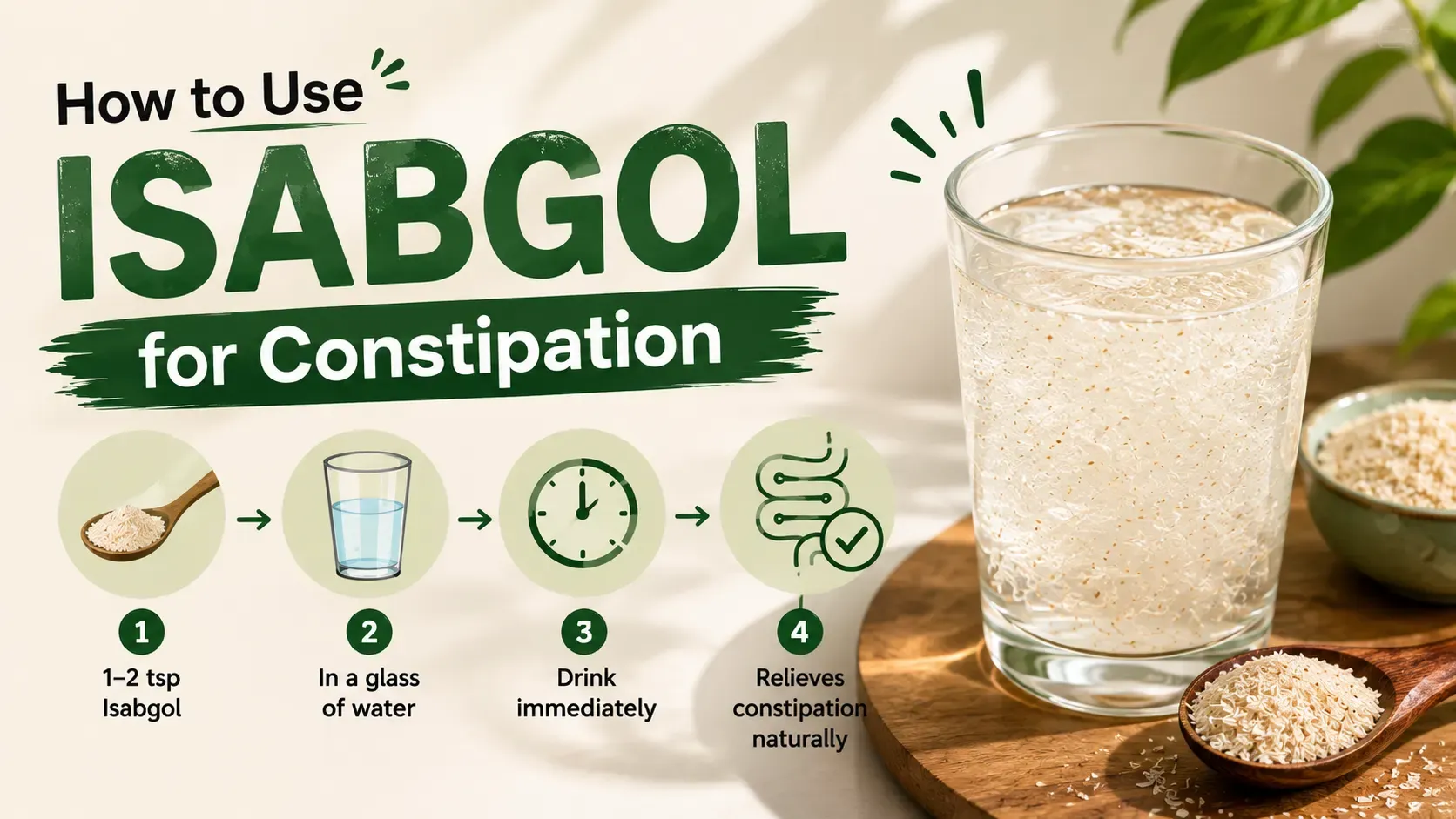
To use isabgol for constipation, mix 1 to 2 teaspoons of psyllium husk in 200 to 250 ml warm water, stir well and drink immediately, then follow with another full glass of water. Bedtime is usually the best time for a morning bowel movement. Use it short term, and speak to a doctor if constipation is recurring, severe or linked with warning symptoms.
Isabgol, also called psyllium husk, helps constipation by forming a thick gel in the gut. This gel holds water, softens stool and makes it easier to pass, usually within 12 to 24 hours in mild constipation.
Isabgol treats the symptom, not always the cause. If constipation keeps returning, it may point to low fibre intake, poor hydration, slow gut movement, stress, medication effects or another digestive concern that needs deeper care.
What Is Isabgol and How Does It Work for Constipation?
Isabgol is the common Indian name for psyllium husk, the seed coat of Plantago ovata. Isabgol and psyllium husk are the same in composition and effect, though the names may differ by region and product type.
When mixed with water, isabgol absorbs liquid and swells into a soft, viscous gel. This gel supports bowel movement through four main actions:
- •Bulk-forming: It increases stool mass, which helps the colon move stool forward.
- •Stool softening: It holds water inside the stool, reducing dryness and hardness.
- •Water retention: It keeps the intestinal environment more hydrated, especially when taken with enough fluids.
- •Smoother movement: The gel-like texture can make stool passage more comfortable.
Important: Isabgol works best for mild to moderate functional constipation. It should not be used as the only solution for chronic constipation without understanding the root cause.
How to Use Isabgol for Constipation: Step-by-Step Methods
The method you choose affects how quickly isabgol works and how comfortable it feels. If your problem keeps coming back, learning about the causes of constipation can help you avoid using fibre as a permanent shortcut.
With Warm Water: Most Common Method
- Measure 1 to 2 teaspoons of isabgol powder into a glass.
- Add 200 to 250 ml of warm, not boiling, water.
- Stir briskly and drink immediately before it thickens.
- Follow with another full glass of plain water.
- Take it around bedtime if you want a morning bowel movement.
Warm water helps the fibre swell smoothly. The second glass of water is important because psyllium needs adequate fluid to move safely through the gut.
With Warm Milk: For Dry, Hard Stools
- Add 1 teaspoon of isabgol to 200 ml of warm milk.
- Stir well and drink immediately.
- Take it at bedtime and follow with water if your stools are very dry.
This method may suit people whose stools are dry and hard. Avoid milk if it triggers bloating, lactose intolerance symptoms or heaviness.
With Curd: For Mild or Irregular Constipation
- Mix 1 teaspoon of isabgol into a small bowl of fresh curd at room temperature.
- Eat it after lunch or dinner.
- Drink water afterwards to support the fibre effect.
Curd may support gut bacteria alongside fibre. This can be useful when constipation comes with mild bloating or irregular digestion, especially when broader gut microbiome balance is also a concern.
With Aloe Vera Juice: For Gut Cooling and Acidity
- Mix 1 teaspoon of isabgol into 30 ml pure aloe vera juice diluted in 150 ml water.
- Drink it in the morning on an empty stomach only if it suits your body.
- Avoid this method if aloe vera causes cramps, loose stools or irritation.
This method is usually considered when constipation is accompanied by burning, acidity or gut irritation. Use it cautiously and avoid overuse.
Quick Reference: How to Take Isabgol
| Method | How to Take It | Best Time |
|---|---|---|
| Warm water | 1-2 tsp in 200-250 ml warm water | Before bedtime |
| Warm milk | 1 tsp in 200 ml warm milk | At bedtime |
| Curd | 1 tsp with a small bowl of fresh curd | After lunch or dinner |
| Aloe vera juice | 1 tsp in 30 ml aloe vera + 150 ml water | Morning, empty stomach |
Isabgol Dosage for Constipation: How Much to Take
Getting the dosage right is as important as knowing how to take it. Too little may not help, while too much can cause gas, cramps or bloating.
- •Standard adult dose: 1 to 2 teaspoons, around 5 to 10 g, once daily to start.
- •Higher use: Do not increase frequency without medical guidance, especially if you need it for many days.
- •Children aged 6 to 12: Use only with a paediatrician’s advice.
- •Timing rule: Drink immediately after mixing because isabgol thickens quickly.
- •Water rule: Always follow with enough water because low fluid intake can worsen constipation.
A safe starting approach is 1 teaspoon at bedtime for 2 to 3 days, then adjust only if needed and tolerated.
When Is the Best Time to Take Isabgol for Constipation?
The best time for many adults is bedtime, about 30 minutes before sleep. Taking isabgol at night gives the fibre several hours to hold water and support a morning bowel movement.
| Goal | Best Time | How to Take It |
|---|---|---|
| Morning bowel movement | 30 minutes before bedtime | 1-2 tsp in warm water |
| Midday relief | After lunch | 1 tsp with curd or plain water |
| Gut cooling and acidity | Morning, empty stomach | 1 tsp with diluted aloe vera juice |
| Mild irregular constipation | After dinner | 1 tsp with warm water |
| Pregnancy-related constipation | After meals with doctor approval | 1 tsp in warm water only |
Can You Take Isabgol in the Morning?
Yes. A morning dose with enough water may support a bowel movement later in the day. However, many people find bedtime use more predictable because it works overnight.
Can You Take Isabgol on an Empty Stomach?
Yes, but only when it suits your body. It may be used on an empty stomach for constipation with acidity or gut irritation, but people with sensitive stomachs, ulcers or morning medicines should be careful.
Keep a 2-hour gap between isabgol and medicines unless your doctor advises otherwise, because fibre can reduce absorption of some medicines.
Pregnancy-related constipation needs extra caution. Read more on constipation in pregnancy and speak to your doctor before starting any fibre supplement.
Sat Isabgol vs Regular Isabgol Powder: Which Should You Choose?
Sat isabgol and regular isabgol powder come from the same plant and work through the same bulk-forming mechanism. The difference is usually processing, texture and concentration, not the basic effect.
| Feature | Sat Isabgol | Regular Isabgol Powder |
|---|---|---|
| Source | Refined husk extract | Whole psyllium husk, ground |
| Texture | Finer and lighter | Coarser and slightly gritty |
| Concentration | May feel stronger per spoon | Standard potency |
| Dose needed | Often 0.5-1 tsp is enough | Usually 1-2 tsp |
| Availability | Common in pharmacies | Widely available in households and stores |
| Best for | People who prefer smoother texture | Everyday household use |
For most people, regular isabgol powder is enough. Choose sat isabgol if you prefer a finer texture or find coarse powder hard to swallow.
Can You Take Isabgol Daily? What Happens with Long-Term Use
Isabgol may be used short term for occasional constipation, but using it every night for months without checking the cause is not ideal.
- •More gas and bloating: In some people, extra fibre ferments in the colon and increases gas.
- •Missed root cause: If constipation is due to low activity, stress, medicines, poor diet or slow motility, isabgol alone will not fix it.
- •Medication timing issues: Regular use can interfere with the timing and absorption of medicines if not spaced properly.
- •Water dependence: Without enough water, it can make stool heavier and harder to pass.
| Duration | Recommendation |
|---|---|
| Occasional use, 1-3 days | Usually suitable for many adults when taken with enough water |
| Short-term use, up to 2-4 weeks | Monitor gas, bloating and stool pattern |
| Daily use beyond 4 weeks | Consult a doctor and check the root cause |
| Chronic constipation, 3+ months | Isabgol alone is not enough, deeper care is needed |
A better long-term plan combines fibre with hydration, movement, meal timing, sleep and trigger tracking.
Common Mistakes to Avoid When Using Isabgol for Constipation
Isabgol gives the best result when used correctly. These mistakes can reduce its effect or cause discomfort:
- •Not drinking enough water: This can worsen constipation or make the fibre too thick.
- •Letting it sit after mixing: It thickens quickly, so drink it immediately.
- •Using cold liquids at night: Warm or room-temperature liquids are usually more comfortable.
- •Taking it with medicines: Keep a gap unless your doctor says otherwise.
- •Overdosing: A heaped tablespoon can increase gas, cramps and bloating.
- •Using it permanently: It relieves symptoms, but recurring constipation needs root-cause care.
Root Causes of Constipation That Isabgol Cannot Fix
Isabgol addresses stool bulk and water retention, but it does not solve every cause of constipation. Common missed causes include:
1. Weak Digestion
When food is not digested well, heaviness, bloating and slow stool movement may follow. Isabgol can add bulk, but it does not improve digestion by itself.
2. Slow Gut Motility
Natural intestinal movement can slow due to stress, inactivity, low fibre intake, certain medicines or medical conditions. Fibre helps stool form, but movement habits also matter.
3. Dehydration and Gut Dryness
Low water intake and low dietary fats can make stools dry and hard. Isabgol needs water to work, so dehydration must be corrected.
4. Stress and Gut-Brain Disconnect
Stress can affect bowel rhythm through the gut-brain connection. Along with food and fibre, practices like walking, breathing and yoga for constipation may support bowel regularity.
5. Gut Dysbiosis
Gut bacteria imbalance can affect stool consistency, gas and digestion. Isabgol has mild prebiotic properties, but significant dysbiosis may need diet, lifestyle and professional guidance.
Key Benefits of Isabgol Beyond Constipation Relief
Isabgol is best known for constipation relief, but psyllium fibre may also support other areas of gut and metabolic health when used appropriately.
- •Blood sugar support: Psyllium may slow carbohydrate absorption and support steadier post-meal glucose response.
- •Cholesterol support: Soluble fibre can bind bile acids in the gut and may support healthier cholesterol levels alongside diet changes.
- •Gut bacteria support: Psyllium can act like a prebiotic fibre for some beneficial bacteria.
- •Stool consistency: It can help soften hard stools and may also help firm loose stools in some IBS patterns under guidance.
- •Fullness support: The gel can slow gastric emptying and make some people feel fuller.
These benefits usually require consistent habits over weeks. For constipation, relief may appear sooner, but recurring symptoms still need the cause to be addressed.
What the Research Says: Evidence for Isabgol and Constipation
Psyllium husk is one of the better-studied soluble fibres for constipation. Evidence supports its role as a bulk-forming fibre that absorbs water, forms a soft bulky stool and helps stool pass more comfortably.
- •Stool frequency and softness: Psyllium may improve bowel movement frequency and stool consistency in functional constipation.
- •Short-term safety: It is generally well tolerated when taken with enough water, but gas and bloating can occur.
- •Long-term results: Fibre works best when combined with hydration, diet changes and physical activity.
- •Limits: It does not correct every cause of constipation, including severe motility problems, medication side effects or underlying disease.
Safety note: Seek medical help if constipation is severe, new, persistent, associated with blood in stool, unexplained weight loss, vomiting, fever or strong abdominal pain.
Isabgol vs Structured Gut Care: Is Isabgol Enough?
Isabgol is useful for short-term relief, but recurring or chronic constipation usually needs a structured plan that looks at the root cause, diet, hydration, stress, sleep and bowel habits.
| Feature | Isabgol Alone | Structured Gut Care |
|---|---|---|
| Relief speed | Often 12-24 hours in mild constipation | Initial changes may take a few days |
| Root cause correction | No, mainly symptom relief | Yes, focuses on triggers and underlying patterns |
| Personalised to your body | No | Yes |
| Diet and hydration support | Limited | Included |
| Stress and gut-brain support | No | Included where relevant |
| Best for | Occasional constipation | Recurring constipation or multiple gut symptoms |
| Long-term safety | Needs caution with daily unsupervised use | Designed around sustainable habits and guidance |
For occasional constipation, isabgol may be enough when used correctly. For constipation that keeps coming back, a gut-health assessment and personalised plan are more useful than increasing the dose again and again.
When Should You See a Doctor?
Do not rely on isabgol alone if constipation is frequent, severe or linked with warning signs. Speak to a doctor if you notice:
- •Blood in stool or black stool
- •Unexplained weight loss or loss of appetite
- •Severe abdominal pain, vomiting or fever
- •Constipation that lasts more than 2 to 3 weeks despite home care
- •A sudden change in bowel habits after age 45 to 50
- •Constipation with pregnancy, diabetes, thyroid disease or regular medication use
- •Repeated need for laxatives, enemas or daily fibre supplements
Constipation Keeps Coming Back?
Understand your digestion pattern, triggers and gut-health signs with a free gut health test.
Take Free Gut Health Test Explore More Gut Health ArticlesConclusion
Isabgol can be a helpful short-term remedy for mild constipation when taken correctly with enough water. The simplest method is 1 to 2 teaspoons in warm water at bedtime, followed by another glass of water.
However, if constipation is frequent or long-lasting, do not keep increasing fibre without checking the cause. A better plan includes hydration, fibre-rich foods, movement, sleep, stress support and medical guidance when warning signs are present.
Key Takeaways
A complete guide on using isabgol for constipation, with dosage, timing, methods, mistakes, safety tips and doctor guidance.
Your gut is unique your healing should be too.

Disclaimer
The content provided by Mool Health is for educational and informational purposes only and should not be considered a substitute for professional medical advice, diagnosis, or treatment.