
Medicine for Gas and Bloating: Types, How They Work, and When to Use Them
A complete guide to gas and bloating medicines, including simethicone, enzymes, antacids, motility drugs, Ayurvedic options and safety signs.
Quick Answer
Not every medicine for gas and bloating works the same way. Choosing the wrong type for your symptom pattern is exactly why many people get short-term relief but keep returning to the pharmacy.
- For trapped gas: Simethicone-style antiflatulents may help within 30-60 minutes
- For food-triggered gas: Digestive enzymes work best when taken with meals
- For acidity-related bloating: Antacids or H2 blockers may help when sour burps or burning are present
- For mild recurring bloating: Ajwain, hing, jeera, saunf and lifestyle habits may support digestion gradually
- Doctor needed: Daily bloating beyond two weeks, weight loss, blood in stool, severe pain or vomiting
Not every medicine for gas and bloating works the same way. Choosing the wrong type for your symptom pattern is exactly why many people get short-term relief but keep returning to the pharmacy.
The right medicine depends on your specific trigger: trapped gas after meals, acidity-related bloating, slow digestion, or gut spasm. Antiflatulents like simethicone work within 30-60 minutes for trapped gas. Digestive enzymes work best taken with food. Ayurvedic options like ajwain and hing work gently over days when symptoms are mild.
What Is Medicine for Gas and Bloating?
Medicine for gas and bloating refers to a category of treatments - allopathic, Ayurvedic, and OTC - that target different points in the gas cycle: from food entering the stomach to gas exiting the gut.
These medicines do not all work the same way. Some break down gas bubbles already formed in the gut. Others prevent gas from forming by completing digestion before fermentation begins. A third group addresses the gut environment itself - acidity, motility, or muscle spasm - that causes gas to accumulate.
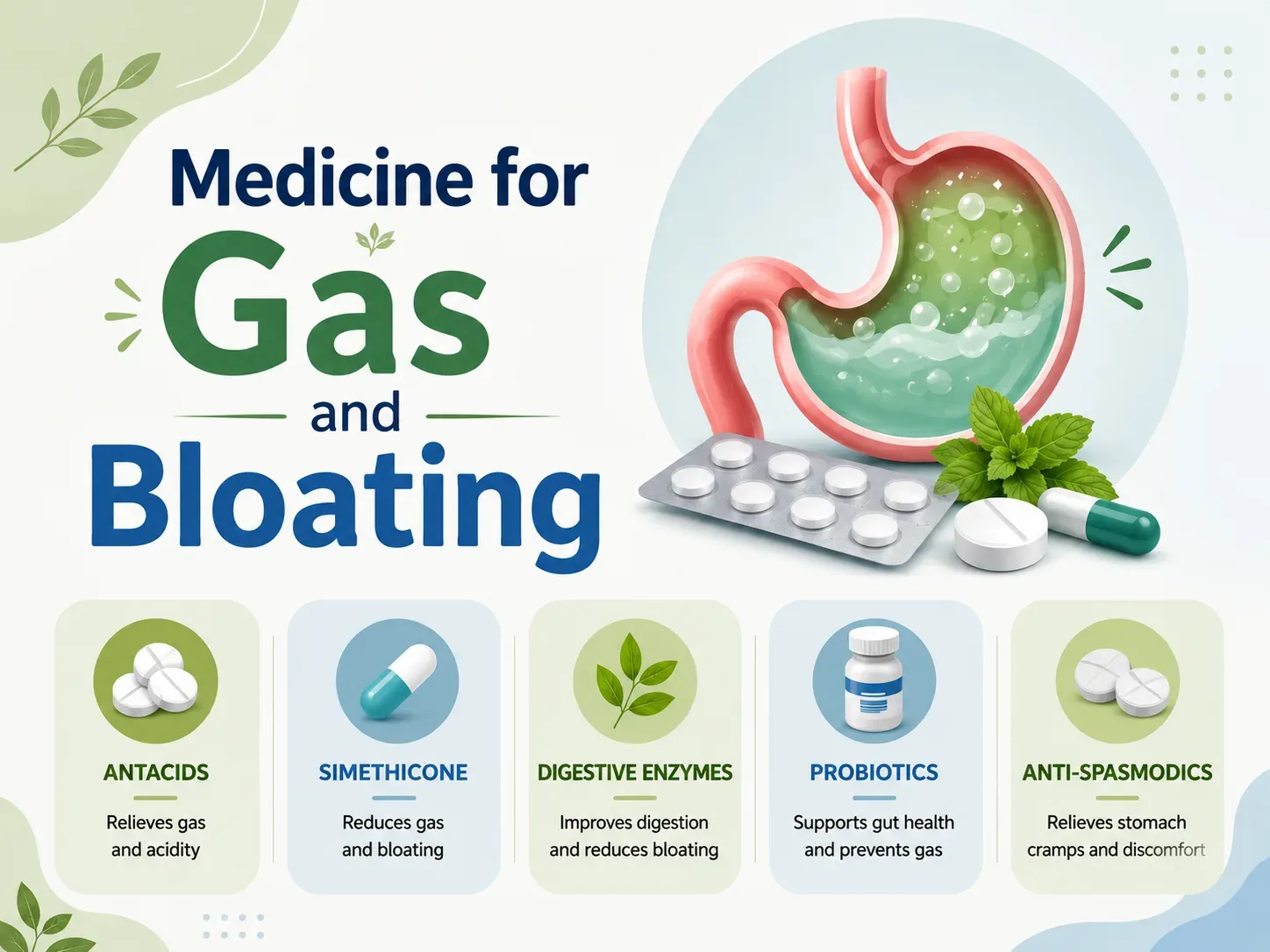
The five major types are:
- Antiflatulents - break trapped gas bubbles
- Digestive enzymes - prevent gas formation at the source
- Acid-reducing medicines - correct the gastric environment
- Gut motility medicines - speed up food and gas movement
- Antispasmodics - relax gut muscle to ease cramping and release trapped gas
Ayurvedic carminatives such as ajwain, hing, jeera, saunf, and Triphala form a parallel category that works more gradually on the digestive environment.
What Causes Gas and Bloating?
Gas and bloating typically occur when food is not digested properly. Undigested food reaches the large intestine, where gut bacteria ferment it and produce gas. When that gas cannot move forward, it causes pressure, distension, and discomfort.
Common causes include:
- Eating too fast and swallowing excess air
- Overeating or consuming heavy, oily, or spicy meals
- Food intolerances such as lactose or fructose malabsorption
- Constipation or irregular bowel movements causing stool backup and fermentation
- Stress and anxiety affecting gut motility
- Late-night dinners slowing gastric emptying
- Irregular meal timing disrupting digestive rhythm
According to Mool Health's digestive health team, up to 40% of people with functional bloating have measurable delays in gastric emptying - meaning slow gut movement, not just excess gas production, is a significant driver of symptoms.
How Does Medicine for Gas and Bloating Actually Work?
Medicine for gas and bloating does not stop gas production entirely. Each type targets a specific point in the gas cycle.
1. Antiflatulents - e.g., simethicone, activated charcoal
Simethicone works by breaking the surface tension of small gas bubbles in the stomach and intestines. Thousands of tiny bubbles merge into fewer, larger ones - making it physically easier for the body to expel them through belching or flatulence. Simethicone is not absorbed into the bloodstream. Relief typically begins within 30-60 minutes.
2. Digestive Enzymes - e.g., amylase, lactase, alpha-galactosidase
When the body does not produce enough digestive enzymes, undigested carbohydrates and proteins reach the large intestine, where gut bacteria ferment them and produce gas. Digestive enzyme supplements complete the digestion the stomach could not finish - reducing the fermentable material that reaches the colon. They work best taken just before or at the start of a meal.
3. Acid-Reducing Medicines - e.g., antacids, H2 blockers
Excess stomach acid can slow gastric emptying, keeping food in the stomach longer and producing more gas. Acid-reducing medicines restore a normal gastric environment, allowing food to move forward more efficiently. This is why acidity-related bloating often feels better after antacids - the gas downstream of delayed emptying is also resolved.
4. Gut Motility Medicines - e.g., domperidone, metoclopramide (prescription only)
These medicines act on the gut's nervous system, speeding up the movement of food and gas through the digestive tract. They are used when bloating results from slow digestion - gastroparesis or functional dyspepsia - rather than excess gas production. Because they affect gut-brain signalling, they require a doctor's prescription.
5. Antispasmodics - e.g., mebeverine, dicyclomine
When gas is trapped alongside gut muscle spasm - common in IBS - antispasmodics relax the smooth muscle of the intestinal wall. This reduces cramping and allows gas to move forward. Antispasmodics do not reduce the volume of gas; they reduce the pain caused by muscle contracting around it.
6. Ayurvedic Carminatives - e.g., ajwain, hing, saunf
Ajwain releases thymol, which stimulates gastric juice secretion and relaxes intestinal smooth muscle - a dual action that both improves digestion and eases gas passage. Hing contains sulfur compounds that inhibit microbial fermentation in the gut, directly reducing gas generation at its source. These remedies work more gradually than antiflatulents but address the fermentation process rather than just the bubbles.
Key fact: Simethicone relieves trapped gas within 30-60 minutes by merging bubbles, while digestive enzymes prevent gas formation by completing digestion before fermentation begins.
Best Medicine for Gas and Bloating: A Symptom-by-Symptom Comparison
There is no single best medicine for gas and bloating - the right choice depends on your symptom pattern.
| Your Main Symptom | Best Medicine Type | Active Ingredient (Common Example) | OTC or Prescription? | Typical Relief Timeline |
|---|---|---|---|---|
| Trapped gas, pressure after meals | Antiflatulent | Simethicone | OTC | 30-60 minutes |
| Post-meal heaviness, food intolerance | Digestive enzyme | Alpha-galactosidase, lactase | OTC | With meal (prevents gas) |
| Gas + acidity + sour burps | Antacid or H2 blocker | Calcium carbonate, famotidine | OTC / prescription | 15-60 minutes |
| Bloating + constipation | Gut motility support + bowel regulator | Domperidone + ispaghula | Prescription + OTC | 1-3 days for bowel regularity |
| Painful cramps + trapped gas | Antispasmodic | Mebeverine, dicyclomine | Prescription | 30-90 minutes |
| Mild bloating after dal or legumes | Carminative herb | Ajwain (thymol), hing | OTC / kitchen | 20-45 minutes |
| Gas linked to stress and irregular gut movement | Ayurvedic digestive formula | Jeera + saunf + Triphala | OTC | Days to weeks for sustained improvement |
What this table tells you:
- If bloating is acute and occasional - an OTC antiflatulent or carminative is usually sufficient
- If bloating is daily or linked to constipation - a prescription medicine addresses the motility issue, not just the gas
- If bloating is chronic and tied to stress or irregular eating - symptom medicines help short-term, but the digestive root cause needs to be addressed
Key fact: For bloating with constipation, gut motility support combined with bowel regulators targets both stalled digestion and resulting gas - antiflatulents alone will not be enough.
Is Allopathy Better Than Ayurveda for Gas and Bloating?
Neither is universally better. Allopathic and Ayurvedic medicines for gas and bloating work at different speeds and address different parts of the problem.
| Factor | Allopathy (e.g., simethicone, domperidone) | Ayurveda (e.g., ajwain, hing, Triphala) |
|---|---|---|
| Speed of relief | Fast - 30 minutes to 2 hours | Slower - 20 minutes to several days |
| Mechanism | Targets a specific physiological step | Supports digestive fire (agni) and reduces fermentation |
| Root-cause treatment | No - symptom management only | Partial - improves digestion environment over time |
| Side effect risk | Low for OTC; higher for prescription motility drugs | Very low at standard culinary doses |
| Best for | Acute, moderate-to-severe symptoms | Mild, recurring symptoms with a dietary trigger |
| Long-term sustainability | Not recommended without addressing root cause | Can be sustained as part of daily routine |
For most people with recurring bloating, a combined approach works best: use allopathic medicine for acute relief while building Ayurvedic and lifestyle habits to reduce how often acute episodes occur.
Mool Health's approach to digestive care recommends exactly this - matching the medicine type to the severity and speed needed, while simultaneously reducing the triggers that make medicine necessary in the first place.
How Long Does Medicine for Gas and Bloating Take to Work?
One reason people feel let down by gas medicine is expecting the wrong timeline. Different medicines for gas and bloating work at different speeds.
Within 30-60 minutes: Antiflatulents like simethicone act quickly because they work physically - no absorption into the bloodstream is needed. If simethicone provides no relief after two doses, the issue is likely not trapped gas but slow gut movement or acidity - which requires a different medicine type.
Within 1-3 hours: Antacids and antispasmodics typically need one to three hours for full effect. Taking an antacid well after a meal rather than with it can delay relief significantly.
Within 1-3 days: For bloating linked to constipation, normalising bowel movements - which takes one to three days with regularity support - is what ultimately reduces gas. Trapped stool is a primary driver of fermentation and gas buildup.
After 2-4 weeks of consistent use: Ayurvedic digestive formulas that support agni (digestive fire) and reduce fermentation in the gut show their full effect over two to four weeks of regular use. These are not fast-relief medicines - they improve the underlying digestive pattern.
When medicine is not enough: If you have been using OTC gas medicine for more than two weeks without sustained relief, or if you need medicine more than three times a week, that pattern suggests the root cause - poor digestion, food intolerance, gut dysbiosis, or stress-linked gut motility - needs to be evaluated, not managed with repeated doses.
Key fact: Simethicone works in 30-60 minutes; Ayurvedic digestive herbs typically show sustained improvement after two to four weeks of consistent use.
Ayurvedic Medicines for Gas and Bloating: What Each One Does
Ayurvedic and traditional remedies for gas and bloating are widely used in India, particularly for mild and recurring symptoms with a clear dietary trigger.
- Ajwain (carom seeds): Releases thymol, which stimulates gastric juice secretion and relaxes intestinal smooth muscle. Effective for trapped gas and post-meal heaviness, typically within 20-45 minutes.
- Hing (asafoetida): Contains sulfur compounds that inhibit microbial fermentation in the gut. Used in small amounts in cooking - particularly effective after dals and legumes.
- Jeera (cumin) and saunf (fennel): Gentle carminatives commonly used after meals to reduce mild bloating and heaviness. Safe for regular use.
- Triphala: Used when gas and bloating are linked to constipation. Supports bowel regularity over two to four weeks without acting as a harsh laxative. Not a fast-relief medicine.
These remedies work more gradually than allopathic options, but they address the fermentation process and digestive environment rather than just the symptoms already present.
What Does the Research Say About Gas and Bloating Medicine?
Most research on medicine for gas and bloating comes from studies on functional gastrointestinal disorders - conditions where the gut is structurally normal but works inefficiently.
On simethicone: A systematic review published in Clinical Gastroenterology and Hepatology found that simethicone provides statistically significant short-term relief from gas and bloating symptoms compared to placebo, but shows no evidence of modifying the underlying digestive process. It is a symptomatic treatment, not a cure.
On digestive enzymes: For lactose intolerance specifically, supplemental lactase reduces gas and bloating symptoms in 70-80% of affected individuals when taken with lactose-containing meals, according to data from the National Institute of Diabetes and Digestive and Kidney Diseases (NIDDK). Alpha-galactosidase has shown similar benefit for legume-related gas in small controlled trials.
On ajwain: Ajwain's antiflatulent properties are attributed primarily to thymol. Studies have demonstrated antispasmodic and carminative activity in animal and in vitro models, supporting traditional use as a digestive aid. Controlled human trials specifically on ajwain for bloating remain limited - Ayurvedic evidence here is largely mechanistic and traditional rather than from large RCTs.
On gut motility and bloating: A 2020 review in Neurogastroenterology and Motility found that up to 40% of people with functional bloating have measurable delays in gastric emptying, suggesting that motility-improving medicines may be underused in non-prescription management of bloating.
On lifestyle: Research consistently finds that dietary modification - reducing fermentable carbohydrates (FODMAPs), eating slowly, and managing stress - reduces bloating severity by 50-70% in people with IBS, often matching or exceeding the effect of medicines alone.
Key fact: Research shows that dietary modification reduces bloating severity by 50-70% in IBS patients - often matching the effect of medicines alone.
Who Should Avoid Self-Medicating for Gas and Bloating?
OTC gas medicine is appropriate for most healthy adults with occasional, mild symptoms. However, self-medicating is not appropriate in all situations.
Stop self-medicating and see a doctor if:
- Bloating is present daily for more than two weeks
- You have unintended weight loss alongside bloating
- There is blood in your stool or dark, tarry stools
- Bloating is accompanied by severe or worsening abdominal pain
- Vomiting does not resolve within 24 hours
- Bloating started after a course of antibiotics (possible gut dysbiosis)
- You have a known condition like IBD, Crohn's disease, or coeliac disease
Use extra caution if:
- You are pregnant or breastfeeding - consult a doctor before any OTC gas medicine
- You are taking other medications - antacids and antispasmodics can interact with several common drugs
- You have gastric ulcers - some Ayurvedic preparations containing hing or pippali in high doses should be avoided
- You have kidney disease - some antacids contain magnesium or calcium that require renal clearance
Mool Health recommends that anyone experiencing daily bloating for more than two weeks seek clinical evaluation rather than cycling through different OTC options.
Key fact: Daily bloating lasting more than two weeks - especially with weight loss or blood in stool - requires medical evaluation, not more OTC medicine.
Lifestyle Steps That Make Gas Medicine Work Better
Medicine for gas and bloating works significantly better when combined with targeted daily habits. Research shows dietary and lifestyle changes can reduce bloating severity by 50-70% in IBS patients - often matching the effect of medicines alone.
1. Eat slowly and chew properly Eating fast increases swallowed air and worsens gas. Chewing food thoroughly reduces the load of undigested material reaching the colon.
2. Keep meals light and regular Skipping meals and then overeating in one sitting overwhelms digestive capacity and increases fermentation in the gut.
3. Avoid late-night dinners Eating within two to three hours of sleep leaves food fermenting in a gut that has almost stopped moving. Aim to finish your last meal at least three hours before bedtime.
4. Walk after meals Even a ten-minute walk after eating supports gut motility and helps gas move forward and exit naturally.
5. Manage stress actively Stress directly affects gut motility through the gut-brain axis. Chronic stress slows gut movement, which increases fermentation and gas production.
6. Identify food triggers Fermentable carbohydrates - found in certain legumes, dairy, wheat, onions, and cruciferous vegetables - are among the most common dietary drivers of gas. Identifying your personal triggers reduces how often medicine is needed.
Mool Health’s Perspective on Medicine for Gas and Bloating
Mool Health looks at gas medicine as short-term support, not the complete solution. If gas and bloating keep returning, the deeper pattern may involve meal timing, food triggers, constipation, slow digestion, acidity, gut bacteria imbalance, or stress-linked gut motility.
The safest approach is to match the medicine to the symptom pattern first, then reduce the triggers that make medicine necessary. This means tracking what you ate, when symptoms started, bowel movement pattern, stress level, and whether acidity or constipation is also present.
Disclaimer
This article is for general educational purposes only and does not replace medical advice, diagnosis, or treatment. Do not start, stop, or combine medicines without consulting a qualified healthcare professional, especially if you are pregnant, breastfeeding, diabetic, have kidney disease, ulcers, IBD, Crohn's disease, coeliac disease, or take other medications.
Key Takeaways
A complete guide to gas and bloating medicines, including simethicone, enzymes, antacids, motility drugs, Ayurvedic options and safety signs.
Your gut is unique your healing should be too.

Disclaimer
The content provided by Mool Health is for educational and informational purposes only and should not be considered a substitute for professional medical advice, diagnosis, or treatment.