
Bloated Stomach and Face: Causes, Symptoms & Relief Tips
Bloating in the stomach and face can happen due to digestion issues, excess salt, hormones, or water retention. This guide explains causes and relief methods.
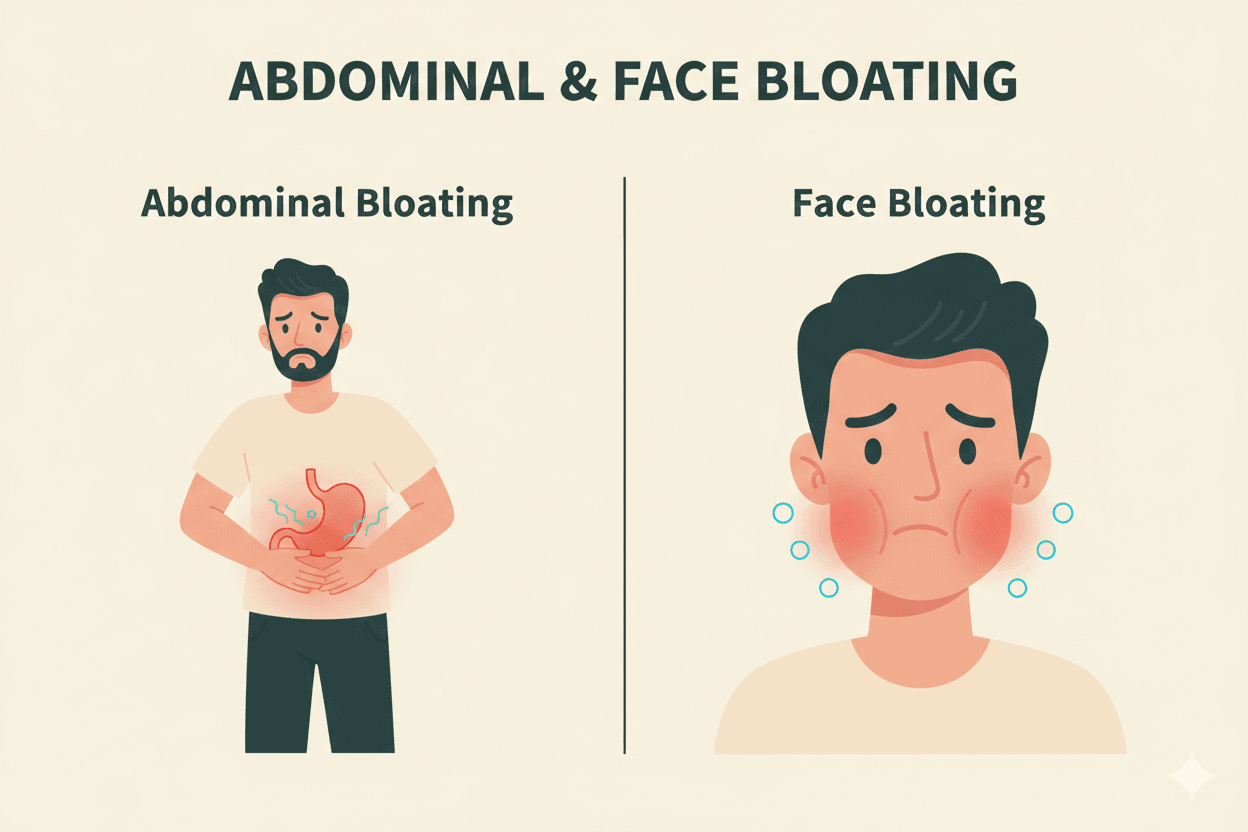
✏️ Quick Answer
A bloated face and stomach together usually signal fluid retention, slow digestion, or gut bacteria imbalance, not fat gain. Both share common triggers: high salt intake, poor sleep, stress, constipation, and hormonal changes. Reducing salt, eating early, staying hydrated, and supporting digestion typically improves both within a few days.
- A bloated face and stomach share common triggers: high salt, poor sleep, stress, and slow digestion
- Facial puffiness from bloating is temporary, it can change within hours
- The face and gut are connected: gut inflammation can drive fluid retention in the face
- Constipation alone can worsen both abdominal bloating and facial puffiness
Most people wake up with a puffy face and a tight, uncomfortable stomach and assume they ate something wrong. Sometimes that is true. But in most cases, a bloated face and stomach at the same time signal two things happening together: fluid retention pulling water into your face and abdomen, and trapped gas or slow digestion creating pressure in your gut. Both can happen overnight from a single salty meal, a poor night's sleep, or a stressful day.
The good news: because this is fluid and gas, not fat, most people see clear improvement within 24 to 48 hours when the right triggers are addressed.
What Is Abdominal Bloating?
Abdominal bloating means your belly feels full, tight, or swollen. Some people also notice visible distension, where the stomach looks bigger. what is bloating is usually caused by gas build-up, slow digestion, constipation, or water retention. It is not the same as weight gain.
Many people notice that bloating changes during the day, mild in the morning and worse by evening. This pattern often points to digestion rhythm and gut movement issues rather than a specific food problem.
What Causes Abdominal Bloating?
Bloating rarely has only one cause. It is often a combination of eating habits, gut sensitivity, gut bacteria imbalance, constipation, stress, and irregular meal timing. Understanding the causes of gas and bloating is the first step to addressing them effectively.
- Eating too fast and swallowing extra air
- Overeating or eating very large portions
- Too much oily, fried, or heavy food
- Constipation or incomplete bowel emptying
- Food intolerance, commonly lactose; sometimes wheat sensitivity
- Gas production from gut bacteria fermenting undigested food
- Stress, anxiety, and poor sleep affecting digestion
- Hormonal changes such as PMS or periods
How Bloating Works: The Mechanism Behind a Puffy Face and Tight Stomach
Bloating does not happen for one reason, it is almost always a combination of three overlapping processes: gas accumulation, fluid retention, and slowed gut movement.
Gas Accumulation: Why Your Stomach Feels Tight
When food is not fully digested in the small intestine, it passes into the colon where gut bacteria ferment it. This fermentation produces gases, hydrogen, carbon dioxide, and methane. When gas builds up faster than the intestine can expel it, pressure rises and the abdomen distends. Eating too fast makes this worse because you swallow extra air alongside food. For trapped gas pain and instant relief, see our complete guide.
Fluid Retention: Why Your Face Puffs Up
High salt intake is the most common driver of facial puffiness. When blood sodium rises after a salty meal, the body holds onto extra fluid to dilute the sodium. This fluid pools in soft tissues, including the face, around the eyes, and in the lower abdomen. Research shows that excess sodium intake can cause the body to retain up to 1.5 litres of additional fluid within 24 hours [1]. Poor sleep has a similar effect, during sleep, the body regulates fluid-balancing hormones like aldosterone and ADH (antidiuretic hormone). When sleep is disrupted, these hormones become imbalanced, causing the body to hold onto more water.
Slowed Gut Movement: The Missing Link Between Face and Stomach
The gut and the face are connected through the body's systemic inflammatory response. When digestion slows, because of stress, constipation, or a heavy meal, the gut lining can become mildly inflamed. This low-grade inflammation triggers a whole-body response that includes fluid redistribution, which can show up as facial puffiness. This gut-face connection is why supporting digestion often clears up facial puffiness faster than any topical skincare routine. Slow digestion symptoms are often the earliest warning sign of this pattern.
What Is Upper Abdominal Bloating?
Upper abdominal bloating is fullness or tightness felt above the navel, usually near the ribs or upper stomach area. Many people feel it soon after eating and describe it as heaviness or pressure.
Common Symptoms of Upper Abdominal Bloating
- Feeling full quickly even after a small meal
- Burping or belching
- Acidity or burning sensation
- Pressure under the ribs
- Food feeling stuck in the stomach
Why Upper Abdominal Bloating Happens
- Late-night or heavy dinner
- Very oily or fried foods
- Eating too fast
- Too much tea or coffee
- Stress affecting digestion
What Is Face Bloating, Bloated Face and Stomach?
Face bloating refers to puffiness around the cheeks, eyelids, or jawline. It is often worse in the morning and reduces as the day goes on. A bloated face and stomach together is a common combination, both are usually linked to water retention and inflammation, not fat gain.
Bloated Face vs Fat Face: How to Tell the Difference
| Feature | Bloated / Puffy Face | Fat Accumulation in Face |
|---|---|---|
| How quickly it changes | Changes within hours or days | Changes over weeks to months |
| Worse at a specific time of day? | Yes, usually worst in the morning, improves by afternoon | Consistent throughout the day |
| Linked to food or salt? | Yes, noticeably worse after salty or heavy meals | Not directly related to single meals |
| Linked to sleep quality? | Yes, worse after poor sleep | Not affected by one night's sleep |
| Feel to the touch | Soft, slightly squishy around eyes and cheeks | Firmer, distributed evenly |
| Linked to gut symptoms? | Often yes, accompanies stomach bloating, gas, or constipation | No gut connection |
| Timeframe for improvement | 24–72 hours with dietary changes | Weeks to months |
Why Does Face Bloating Happen?
- High salt intake, sodium attracts water through osmosis, causing the body to retain extra fluid in soft facial tissue within 12–24 hours of a salty meal
- Poor or irregular sleep, sleep disruption alters fluid-regulating hormones (aldosterone and ADH), leading to more retained water visible in the face
- Hormonal changes, oestrogen fluctuations before and during menstruation cause the body to retain more sodium and water
- Dehydration, when the body senses low fluid intake, it conserves water in soft tissues as a protective response, paradoxically causing puffiness
- Digestive inflammation, when the gut is inflamed from constipation, food intolerances, or gut bacteria imbalance, the resulting systemic inflammation increases whole-body fluid retention
Can Constipation Cause Face Bloating? Yes, Here Is How
Yes, constipation can cause facial puffiness, and the connection is more direct than most people expect. When stool sits in the colon for longer than usual, gut bacteria continue fermenting it and producing gas. At the same time, the prolonged presence of waste in the gut can trigger a mild inflammatory response in the intestinal wall. This local gut inflammation releases cytokines, small signalling proteins, that travel through the bloodstream and increase systemic fluid retention. The face, with its loose connective tissue around the eyes and cheeks, is one of the first places this extra fluid shows up.
In short: constipation leads to gut inflammation, which causes systemic fluid retention, which shows up as facial puffiness.
Signs That Your Face Bloating Is Connected to Constipation
- Facial puffiness is worse after multiple days without a complete bowel movement
- Abdominal bloating and facial puffiness appear and disappear together
- Relief from facial puffiness comes after a bowel movement
- Morning puffiness is consistently worse when you are also feeling backed up
Does Your Face Bloat After Eating? What Is Normal and What Is Not
Some people notice their face looks puffier within 30–60 minutes of eating a large or salty meal. This is real and has a physiological explanation, but it is usually temporary.
Why it happens after eating:
- High-sodium restaurant or packaged food causes rapid water retention within 1–2 hours
- Eating too quickly increases gas in the gut, which creates abdominal pressure that the body responds to with fluid redistribution
- In some people, food intolerances (commonly lactose or wheat) trigger a mild immune response that causes temporary facial puffiness alongside gut discomfort
- A heavy, late-night meal means the body processes digestion in a lying-down position, allowing fluid to pool more easily in the face overnight
How to Debloat Your Face and Stomach: A Step-by-Step Plan
The key to debloating both your face and stomach at the same time is addressing both fluid retention and gut gas together, not separately.
- Cut sodium for 48 hours, the biggest lever. Sodium is the primary driver of fluid retention in both the face and abdomen. Switching from restaurant, packaged, or takeaway food to simple home-cooked meals for just 48 hours, without adding extra salt, typically produces noticeable improvement in facial puffiness within 24 hours. When blood sodium drops, the kidneys release the extra retained fluid as urine.
- Drink more water, not less. When the body is dehydrated, it holds onto more fluid, a counterintuitive but well-established response. Drinking 2–2.5 litres of water through the day signals the body that it is safe to release stored fluid. Space water intake evenly and avoid large amounts at once.
- Move your body for 20–30 minutes. Gentle movement, walking, light yoga, or cycling, stimulates gut contractions (peristalsis) and helps trapped gas move forward and out. It also supports lymphatic drainage in the face, which helps reduce puffiness faster. A 20-minute walk after a meal is more effective than a 30-minute walk on an empty stomach for post-meal bloating.
- Eat your last meal by 7–8 PM. Digestion slows significantly in the evening. A heavy late-night meal means food sits in the gut longer, producing more gas and allowing more time for fluid to redistribute while you sleep. Earlier, lighter dinners are one of the most consistent changes that reduce morning facial puffiness.
- Prioritise 7–8 hours of sleep. Sleep is when the body regulates fluid-balancing hormones. One night of 5-hour sleep can visibly increase morning facial puffiness the next day. Consistent sleep timing helps regulate aldosterone and ADH, reducing fluid retention over time.
- Address constipation if present. If you have not had a complete bowel movement in 1–2 days, this is likely amplifying both your gut bloating and facial puffiness. Increasing fibre, warm water in the morning, and gentle movement are first-line steps.
How to Reduce Bloating Immediately, Quick Relief Steps
- Walk for 10 to 15 minutes, gentle walking stimulates digestion and helps understanding gas and bloating happen naturally
- Sip warm water, warm water can relax gut muscles and support digestion; avoid cold drinks when bloated
- Knee-to-chest position, lying down and bringing the knees towards the chest can help release trapped gas
- Gentle abdominal massage, massage the abdomen in a clockwise direction around the navel to support bowel movement
- Slow breathing, deep, slow breathing helps calm the gut-brain connection and reduce stress-related bloating
What to Expect: How Long Does Bloating Last?
| Cause of Bloating | When You Should See Improvement |
|---|---|
| Salty meal the night before | Facial puffiness reduces within 4–8 hours of waking; full resolution in 24 hours |
| One poor night's sleep | Morning puffiness typically resolves within 2–4 hours of being upright and hydrated |
| Gas from a heavy meal | 30–60 minutes with walking or movement; full resolution in 2–4 hours |
| Constipation | After a complete bowel movement; full reduction may take 1–3 days |
| Dietary changes (reducing salt, early dinner) | Visible improvement in 48–72 hours; consistent improvement over 1–2 weeks |
| Hormonal bloating (PMS-related) | Typically resolves 1–2 days after menstruation begins |
| Chronic / recurring bloating | 2–4 weeks of consistent lifestyle change; may require root-cause investigation |
How to Prevent Bloating Long Term
Long-term bloating relief requires consistent daily habits. Instead of quick fixes, focus on digestion, gut balance, and lifestyle. For guidance on which foods help, see foods that prevent gas and bloating.
- Eat slowly and chew well, proper chewing reduces gas and supports better digestion
- Maintain regular meal timings, eating at fixed times helps regulate digestive rhythm
- Keep dinner early and light, late-night heavy meals commonly worsen bloating and acidity
- Prevent constipation, fibre, water, and daily movement help maintain regular bowel movements
- Manage stress and sleep, stress and poor sleep can slow digestion and increase bloating. Supporting gut health and digestion through consistent habits produces the most durable relief
Foods That Commonly Trigger Bloating
- Maida-based foods
- Milk and paneer (in lactose intolerance)
- Fried snacks and heavy gravies
- Sugary desserts and carbonated drinks
- Large portions of rajma, chole, or chana
- Raw onions or cabbage (for sensitive digestion)
What the Research Says: Evidence on Bloating, Fluid Retention, and Gut Health
- Salt and fluid retention [1]: A 2017 study in Cell Metabolism tracking long-term salt intake found that high-sodium diets cause the body to retain significantly more fluid, independent of water intake, and that reducing sodium led to measurable reductions in total body water within days. This directly explains why a single salty restaurant meal can cause visible facial puffiness by the next morning.
- Stress, cortisol, and gut motility [2]: A review in Nature Reviews Neuroscience confirmed that the gut-brain axis is highly sensitive to psychological stress. Elevated cortisol suppresses the enteric nervous system, slowing gut contractions and increasing the likelihood of gas buildup, constipation, and bloating. This is why bloating often worsens during high-pressure work periods or after emotionally difficult events.
- Gut microbiome and bloating [4]: Research in Cell Host and Microbe (2021) found that individuals with lower diversity of beneficial gut bacteria experience significantly more gas production and abdominal distension after standard meals compared to those with healthier microbiomes. Long-term bloating is as much a gut bacteria problem as a dietary one.
- Functional bloating prevalence [3]: According to the Rome IV diagnostic criteria, functional bloating affects an estimated 14–30% of the general population, with women reporting it more frequently, particularly around hormonal changes.
[1] Rakova N et al., Cell Metabolism, 2017. [2] Mayer EA, Nature Reviews Neuroscience, 2011. [3] Lacy BE et al., Gastroenterology, 2016. [4] Wastyk HC et al., Cell, 2021.
What This Means for You
A bloated face and stomach together are almost always temporary, and almost always respond to the same set of changes: less sodium, better sleep, earlier meals, more water, and a gut that is moving regularly. Most people following the steps in this guide see visible improvement in facial puffiness within 24 hours and meaningful reduction in abdominal bloating within 48–72 hours.
- Today: Reduce salt intake, eat home-cooked food without added salt for the next 48 hours
- This evening: Eat dinner before 8 PM and keep it light, no heavy gravies, fried food, or large portions
- Tonight: Prioritise 7–8 hours of sleep, one good night produces a visible difference in morning face puffiness
- This week: Add a 15–20 minute walk after meals and ensure you are drinking at least 2 litres of water through the day
- If bloating keeps coming back: Consider a structured gut health assessment to understand your specific digestion patterns, microbiome balance, and lifestyle triggers
Key Takeaways
Bloating in the stomach and face can happen due to digestion issues, excess salt, hormones, or water retention. This guide explains causes and relief methods.
Your gut is unique your healing should be too.

Disclaimer
The content provided by Mool Health is for educational and informational purposes only and should not be considered a substitute for professional medical advice, diagnosis, or treatment.