
Why Is My Stomach Bloated in the Evening? Causes & Daily Fixes
Dr. Khemraj
Published on 15/04/2026
Updated on 15/04/2026
✏️ Quick Answer
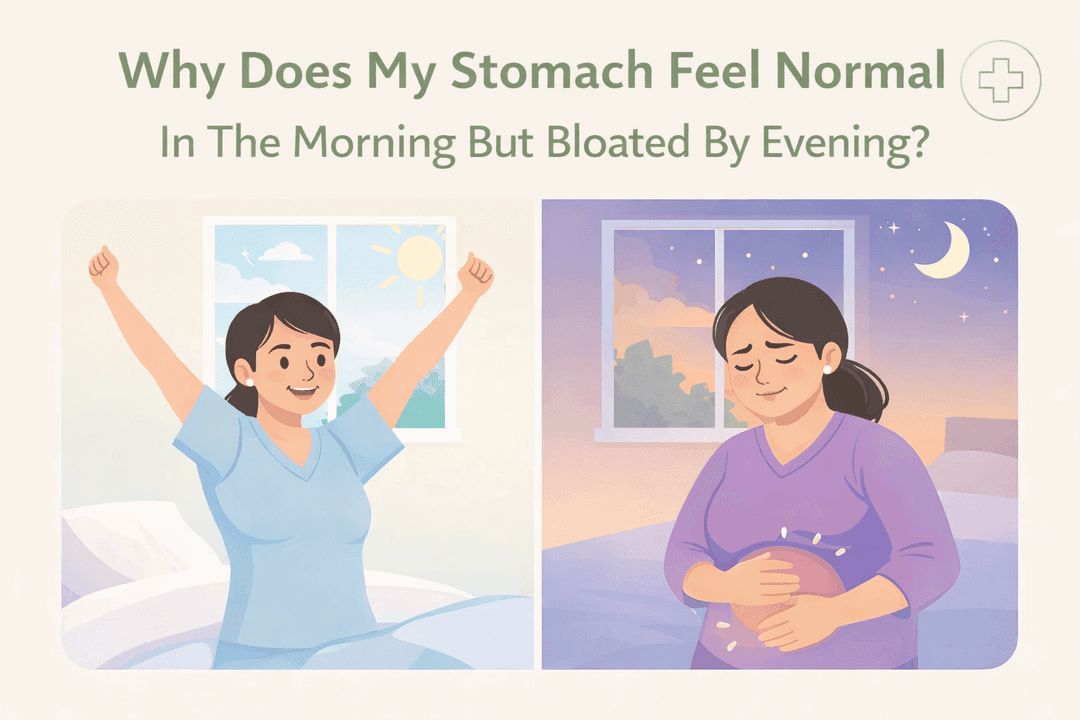
Stomach bloated in the evening despite feeling fine in the morning? It is not about dinner alone. Evening bloating builds up all day — from slowed digestion, accumulated gut gas, stress, poor bile flow, and low physical movement. The morning-to-evening pattern is a reliable sign that your digestion is weakening through the day, not that you ate the wrong thing at night.
If you wake up with a flat or comfortable stomach but feel heavy, tight, or swollen by evening, you are not alone. Evening bloating is one of the most common digestive complaints, especially among adults with long workdays, irregular meals, and high stress.
Many people describe it as:
- A stretched or "pregnant" belly by night
- Tight clothes feeling uncomfortable after sunset
- Gas, fullness, or pressure without eating a large dinner
- Bloating daily, even when food seems simple
This pattern is frustrating because it feels predictable yet confusing. The reason is that evening bloating is rarely about one meal. It is usually the result of how your digestion, gut health, liver function, and lifestyle interact across the entire day.
To understand bloating after a full day, we need to look at what builds up silently from morning to evening.
Why Stomach Bloated in Evening — Is It Really About Dinner?
Dinner often gets blamed, but in most cases, it is not the only cause.
Evening bloating happens when:
- Digestion slows as the day progresses
- Gas production accumulates over hours
- The gut muscles become fatigued
- The nervous system shifts into a stressed or tired state
By evening, your digestive system has already processed multiple meals, snacks, drinks, and stress signals. Dinner may simply be the last trigger that reveals what has been building all day.
Evening Bloating Causes — How Digestion Slows Through the Day
Digestion is strongest when:
- You eat calmly
- You chew well
- Your nervous system is relaxed
In the morning, digestion usually works better because:
- Cortisol levels support gut movement
- The stomach empties faster
- You are less mentally fatigued
As the day goes on:
- Sitting for long hours slows gut movement
- Skipped meals or rushed eating disrupt enzyme release
- Repeated tea, coffee, or snacks strain digestion
By evening, food moves more slowly through the intestines. Slow movement allows gas to stay trapped longer, leading to visible bloating daily by night.
Bloating at Night Causes — Can Gut Bacteria Make It Worse by Evening?
Yes. Your gut microbiome plays a major role in evening bloating.
Gut bacteria ferment carbohydrates and fibres. This process naturally produces gas. When the balance of bacteria is disturbed, fermentation increases and gas builds up.
Common reasons for microbiome-related evening bloating include:
- Irregular meal timings
- Low fibre intake during the day, followed by heavy night meals
- Frequent sugar, bakery items, or packaged snacks
- Antibiotic use in the past
- chronic constipation
During the day, gas may move quietly through the gut. By evening, slowed gut movement causes that gas to accumulate, leading to bloating after a full day.
Why Do I Feel Bloated in the Evening — The Stress and Nervous System Role
Stress affects digestion more than most people realise.
Throughout the day, work pressure, traffic, screen exposure, and deadlines keep the body in a "fight or flight" mode. In this state:
- Blood flow is diverted away from digestion
- Stomach acid and digestive enzymes reduce
- Gut muscles contract irregularly
By evening, this results in:
- Incomplete digestion
- Gas formation
- Abdominal tightness
This is why evening bloating is more common on workdays than holidays.
Bloating Worse in Evening — Does the Liver Play a Role?
Yes, indirectly but importantly.
Your liver helps with:
- Bile production for fat digestion
- Detoxification of metabolic waste
- Regulating blood sugar
When liver function is overloaded due to:
- Late dinners
- High sugar intake
- Alcohol (even occasional)
- Fatty or fried foods
Bile flow can slow down. Poor bile flow affects fat digestion, leading to heaviness, gas, and bloating by evening.
People with liver-related sluggish digestion often report:
- bloating worse after sunset
- Heaviness after oily meals
- A sense of fullness even with small portions
Stomach Bloating at Night From Sitting All Day — Why Movement Matters
Movement is essential for gut motility.
When you sit for long hours:
- Intestinal muscles become less active
- Gas does not move forward efficiently
- The abdomen remains compressed
By evening, this causes:
- Visible abdominal distension
- trapped gas
- Discomfort when standing or lying down
Even people who eat "clean" can experience evening bloating if physical activity is low.
Why Am I Bloated in the Evening — Is Hormonal Balance Involved?
Hormones influence gut sensitivity and water retention.
In women, evening bloating can be worse due to:
- Progesterone slowing gut movement in the second half of the menstrual cycle
- Fluid retention before periods
- Increased gut sensitivity under stress
In men and women, poor sleep and late nights affect cortisol and insulin, which indirectly impact digestion and bloating patterns.
| Daily Habit | How it Contributes to Evening Bloating |
|---|---|
| Skipping breakfast | Slows metabolism and digestion later |
| Rushed lunch | Poor enzyme activation |
| Frequent tea/coffee | Irritates gut lining |
| Late heavy dinner | Overloads tired digestion |
| Low water intake | Harder stool and gas retention |
| Minimal movement | Sluggish gut motility |
Even one or two of these habits repeated daily can cause bloating after a full day.
Feel Bloated Every Evening — How to Reduce It Naturally
Relief comes from supporting digestion throughout the day, not just fixing dinner.
Support digestion from morning
- Eat breakfast within 1–2 hours of waking
- Chew food slowly
- Avoid multitasking while eating
Balance meals across the day
- Include protein, vegetables, and healthy fats in lunch
- Avoid saving the heaviest meal for night
- Keep dinner lighter and earlier when possible
Improve gut movement
- Walk for 10–15 minutes after meals
- Stretch or stand every hour if you sit long
- Gentle evening walks help gas release
Calm the nervous system
- Slow breathing before meals
- Avoid screens while eating
- Wind down stress before dinner
Support liver-friendly habits
- Reduce fried and very spicy food at night
- Limit alcohol frequency
- Maintain regular sleep timing
These steps do not "cure" bloating instantly but reduce the daily buildup that leads to evening discomfort.
Bloated by End of Day — When Should It Be Medically Checked?
Occasional bloating is common. However, seek medical advice if bloating is:
- Painful or worsening
- Associated with unexplained weight loss
- Accompanied by persistent constipation or diarrhoea
- Linked with vomiting or blood in stool
- Present even on light-food days
Key Takeaway: Why Bloating Every Evening Keeps Repeating
Evening bloating is not random. It reflects how your digestion, microbiome, liver, and lifestyle perform across the entire day.
When digestion is rushed, stress is high, movement is low, and meals are poorly timed, bloating daily becomes a pattern by evening.
Understanding this pattern is the first step toward consistent relief.
Frequently Asked Questions
This morning-to-evening bloated stomach in the evening pattern means gas and digestive waste accumulate through the day. Your digestion slows progressively due to sitting, stress, rushed meals, and fatigue. By evening, the stomach is bloated from hours of buildup — not just dinner. Improving meal timing, movement, and stress management through the day reduces it more effectively than changing dinner alone.
The main evening bloating causes are: slowed gut motility through the day, accumulated gas from gut bacteria fermentation, stress-driven reduction in digestive enzymes, poor bile flow due to liver overload, minimal physical movement, and irregular meal timing. These factors compound across the day and peak by evening.
Why bloating at night feels worse — the digestive system is at its lowest activity by evening. Cortisol (which supports gut movement) drops, gut muscles are fatigued after a full day, gas has had hours to accumulate and has nowhere to go easily, and lying down can worsen the trapped feeling. Bloating at night causes are therefore systemic — not just about the evening meal.
Feeling bloated every evening on most days is not normal — it is a pattern that signals your digestive system is struggling to keep up with daily demands. Occasional bloating after a large meal is common. But if you feel bloated every evening regardless of what you eat, it indicates accumulated gut imbalance, slow motility, or microbiome disruption that needs attention.
To reduce feeling bloated by end of day: eat breakfast within 2 hours of waking, chew food slowly at lunch, walk 10–15 minutes after each meal, avoid tea or coffee on an empty stomach, keep dinner lighter and earlier, reduce fried foods at night, and do slow breathing before dinner to calm the nervous system. These habits reduce the daily buildup that causes evening bloating.
This content is for educational purposes only and does not replace medical advice. If bloating is persistent, painful, or associated with other symptoms, consult a qualified healthcare professional.